Meat from Grupo Mateus Originates from Slaughterhouses Linked to Slave Labor and Deforestation
- At least nine meat processing plants supplying Grupo Mateus – five owned by JBS -purchased cattle from properties listed on Brazil’s slave labor registry;
- Brazil’s third-largest supermarket chain lacks public commitments to eliminate deforestation from its supply chain;
- Over half (54%) of beef products analyzed received negative sustainability ratings;
- Complete study available for public review. Read more (in Portuguese)
New investigation by Mighty Earth reveals that Brazil’s third-largest supermarket chain, Grupo Mateus, sells beef from slaughterhouses associated with allegations of labor practices analogous to slavery and deforestation. The survey, which covers the period from 2023 to 2025, points out that 54% of the products analyzed received negative evaluation in sustainability criteria. The complete study is available for public consultation here.
The company ranks worst among major Brazilian retailers for transparency and oversight of its meat supply chain. The lack of public monitoring mechanisms prevents consumers from knowing whether the meat sold by the network contributes to the loss of forests and destruction of Brazilian biomes.
In addition to environmental issues, the investigation found an extensive history of human rights and labor violations, including cases involving the deaths and torture of Black men in the chain’s supermarkets. Since 2023, the company has faced more than 2,900 ongoing lawsuits seeking approximately R$139 million in compensation.
The investigation was conducted based on more than 430 beef products collected from 38 Grupo Mateus stores in the states of Bahia, Ceará, Maranhão, Pará, Paraíba, Pernambuco, Piauí and Sergipe. The analyses used data from the Do Pasto ao Prato application and from the Rapid Response monitoring system, coordinated by Mighty Earth in partnership with AidEnvironment, which analyzes risk indicators and potential legal violations in the beef supply chain.
The results show that 54% of the meat found in the supermarket’s stores was classified as “Very Bad” or “Could Be Better”. These categories apply to products from slaughterhouses with a history of links to deforestation, wildfires, or suppliers included in the so-called “dirty list” of labor practices analogous to slavery. Furthermore, 85% of the slaughterhouses identified as suppliers to the network are not signatories to the Cattle TAC, the leading industry standard commitment for preventing the commercialization of cattle associated with illegal deforestation in the Amazon.
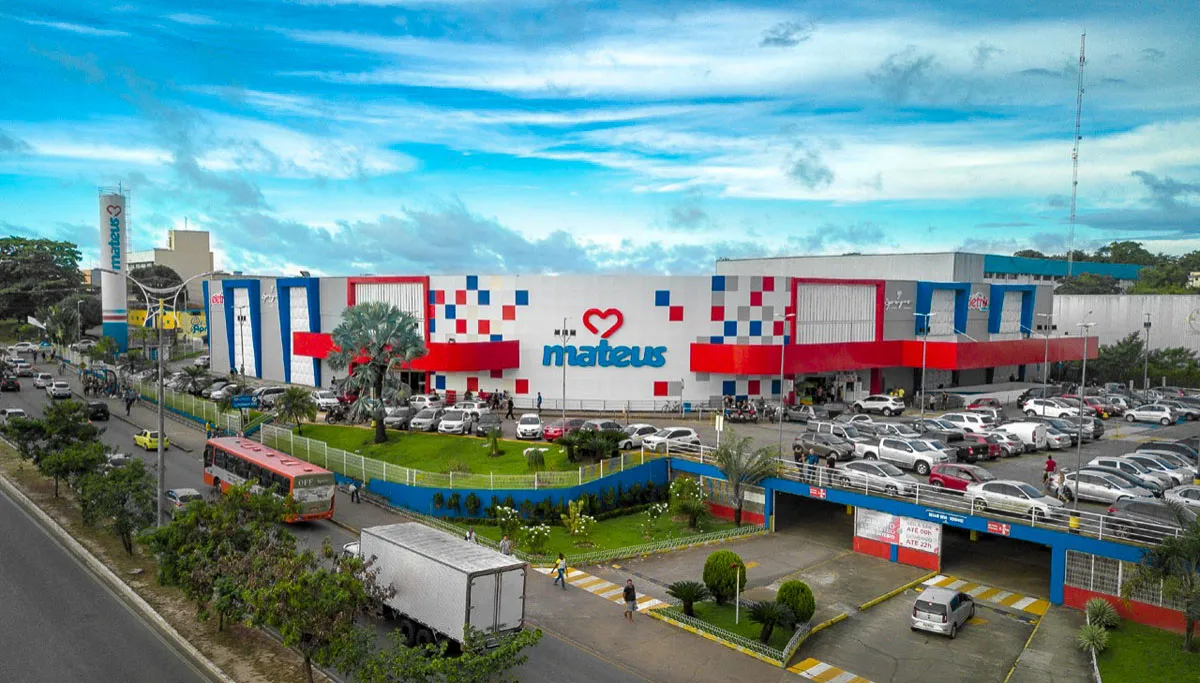
With revenue exceeding R$ 36 billion and a presence in 110 cities in 10 states in the North and Northeast, Grupo Mateus operates more than 270 stores among wholesale clubs, hypermarkets and supermarkets. The company ranks third in Brazilian retail, behind only Carrefour and Assaí. Despite accelerated expansion in recent years, the company has not kept pace with the socio-environmental governance standards adopted by its direct competitors. The company has made no public commitments to eliminate deforestation from its beef supply chain. It also does not disclose purchasing criteria, provide information on traceability mechanisms, or publish sustainability reports.
“Our new investigation found that Grupo Mateus has been buying beef classified as ‘poor’ or ‘very poor’ from suppliers such as JBS, a company consistantly associated with slavery and deforestation. Grupo Mateus must choose between continuing to drive the destruction of climate and nature or following the path of its direct competitors by assuming public commitments to clean its beef supply chains through greater traceability and transparency,” states João Gonçalves, global director of the organization leading the campaign to reduce indiscriminate protein consumption.
“We have been attempting to contact the company since April 2024 and we have also not received a response. What we are asking for is the minimum expected of a company of its size – to deal responsibly with its impacts on climate and nature,” he concludes.
Slaughterhouses linked to slave labor in the Grupo Mateus supply chain
Mighty Earth’s analysis identified at least nine slaughterhouses supplying Grupo Mateus that had purchased, directly or indirectly, from properties included on the Ministry of Labor and Employment’s Dirty List of Slave Labor. Three of these units belong to JBS: JBS Marabá (SIF 457) and JBS Santana do Araguaia (SIF 1110), both in Pará, and JBS Araguaína (SIF 4001), in Tocantins.
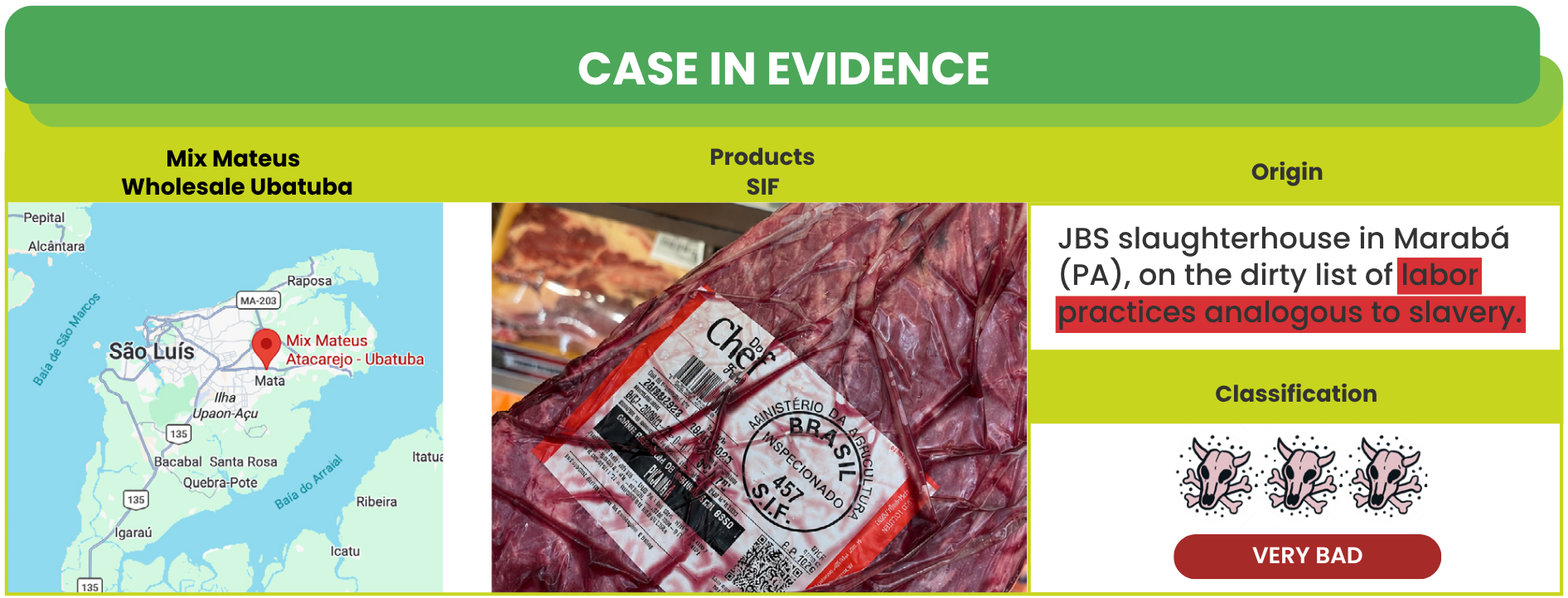
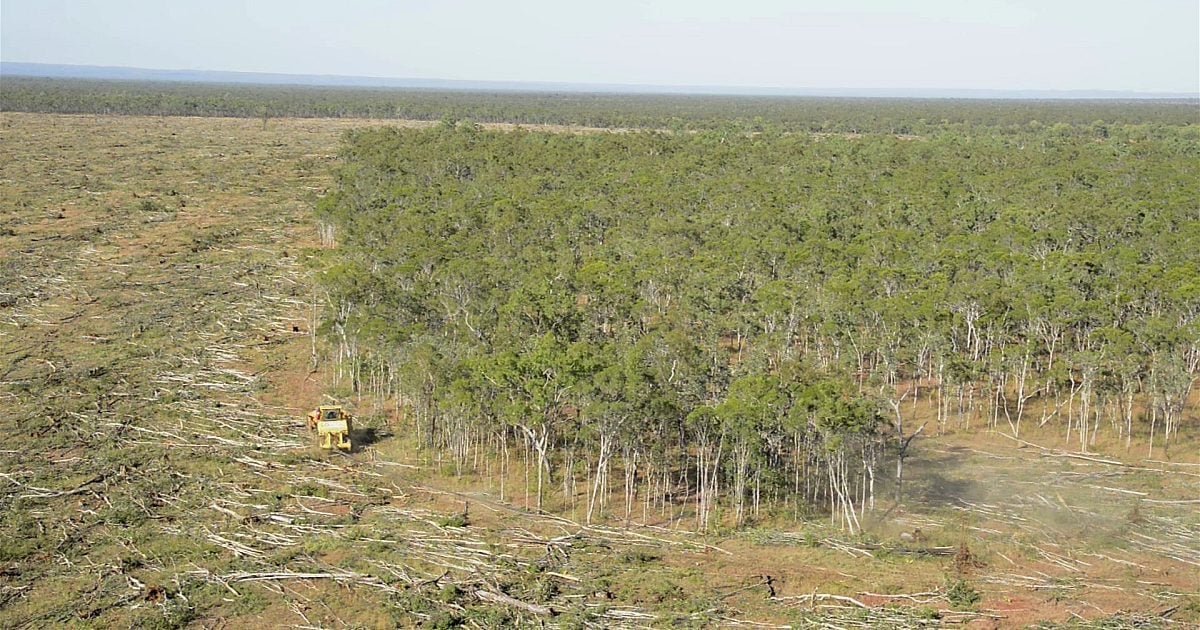
Since October 2023, the Rapid Response system has monitored Grupo Mateus’s exposure to deforestation areas in the Amazon, Cerrado, and Pantanal. Between 2024 and 2025, the tool identified at least 5,147 hectares of deforested areas potentially associated with the company’s supply chain – a number that reflects only what the methodology was able to trace from products collected in the analyzed stores. The actual total, according to Mighty Earth, should be substantially greater given the lack of transparency in the supply chain.
Among the slaughterhouses with the worst evaluation identified by the investigation are JBS units, as well as companies such as Frigorífico Valêncio, Mercúrio Alimentos, Beef Indústria e Comércio de Carnes, Frigorífico Paraíso and Frigoestrela. According to the analysis, these plants are associated with varying risk factors, including the purchase of cattle from areas with a history of deforestation, links to suppliers included on the slave labor dirty list, and insufficient traceability commitments.
Worst evaluation among major retailers
Grupo Mateus received a score of zero in the evaluation of Deforestation and Conversion-Free (DCF) commitments carried out by Mighty Earth in partnership with the Brazilian Institute for Consumer Protection (Idec). Meanwhile, Carrefour, Assaí and Grupo Pão de Açúcar, its direct competitors, have public policies to reduce or eliminate deforestation in their supply chains.
According to Mighty Earth, Grupo Mateus does not disclose beef purchasing criteria, does not publish sustainability reports, does not present public traceability systems and has not adhered to the Boi na Linha Protocol, an initiative created to support the implementation of the Cattle TAC in the Amazon.
Mighty Earth demands that Grupo Mateus:
- Assume a public commitment to zero deforestation and conversion;
- End business relationships with suppliers linked to biome destruction and human rights violations;
- Disclose its list of beef suppliers;
- Establish a public mechanism for receiving and monitoring complaints related to its supply chain.
Mighty Earth states that it has been seeking responses from Grupo Mateus since 2024, including from company executives and its press office, but has never received feedback on the investigation’s findings. In 2009, Grupo Mateus was notified by the Federal Public Ministry in a legal action regarding beef purchases linked to deforestation in the Amazon and warned that it could be held jointly liable for environmental damage if it maintained these purchases.