Majority of Brazil’s top Meatpackers, Soy Traders and Retailers Failing on Deforestation
- New analysis of the DCF commitments of Brazil’s largest meat, soy and retail companies reveals that only two, Marfrig and Carrefour, are on track.
- Controlling indirect suppliers remains the Achilles’ heel for all companies – even for Amaggi, the best positioned soy trader.
- The research highlights need to maintain the Soy Moratorium criteria to prevent accelerating deforestation and pushing the Amazon rainforest closer to collapse.
New analysis by Mighty Earth and the Instituto Brasileiro de Defesa do Consumidor (IDEC) reveals major gaps between the Deforestation and Conversion-Free (DCF) policies of meatpackers, soy traders and retailers in Brazil and their actions to end deforestation and land conversion of native vegetation in supply chains. Fourteen companies were assessed and scored out of 150. Seven companies scored less than 75.
Some leadership, but too many laggards
Marfrig, Amaggi and Carrefour are the leading beef, soy, and retail companies with scores of 137, 98 and 124 respectively, while still having some work to do to be DCF. At the other end of the table, JBS is the lowest ranked beef company with a score of 51, while ALZ and Grupo Mateus are the lowest scoring soy trader and retailer with scores of 17 and 0 respectively. Cargill, the world’s largest soy trader, has rolled back its commitments by weakening or obscuring deforestation cut-off dates and reference years, reflected in its score of 63.
Overall, the analysis found: weak and unclear public DCF commitments; persistent difficulties in ensuring full traceability; very limited collective and individual transparency, and a lack of accountability. It’s also unclear as to whether some companies have adopted real DCF commitments to end deforestation and conversion in all supply chains, or whether they are trying to eradicate just illegal deforestation. Retailers do not include policies for the soy sector.
Alongside this, we argue that voluntary commitments alone cannot meet the urgency of ending deforestation. Binding regulations such as the European Union Deforestation Regulation (EUDR) are essential to ensure zero deforestation is a legal requirement. Embedding this principle in environmental and climate law is crucial to drive systemic change.
Mariana Gameiro, Senior Advisor for Brazil at Mighty Earth said:
“The failings of most of the companies we surveyed come at a time when the Amazon Soy Moratorium is undermined, meaning DCF commitments have become more significant. Companies must maintain the sectoral approach of the mechanism and act on their DCF promises.”
“Retailers and food companies have a crucial role to play and must leverage their market power to cut ties with those that have abandoned the ASM or do not comply with the mechanism’s criteria.”
“We’ve just lived through the third hottest year on record and rely on the Amazon rainforest to mitigate global heating. Food system actors must keep their promises to protect it; to avoid millions more hectares being lost to meat and soy. The Amazon cannot be sacrificed for profit.”
Samanta Fabbris, an analyst with Idec’s Healthy and Sustainable Food programme in Brazil said:
“Without control of the entire production chain, especially indirect suppliers, the market cannot differentiate between effective commitments and formal statements, which affects investment decisions and market access. The commitment to zero deforestation is urgent; it is a matter of food security and planetary responsibility, but also of economic efficiency. Without knowing exactly where the meat and soybeans that reach the market come from, the risks increase for consumers, investors and the country itself.”
Why DCF targets matter
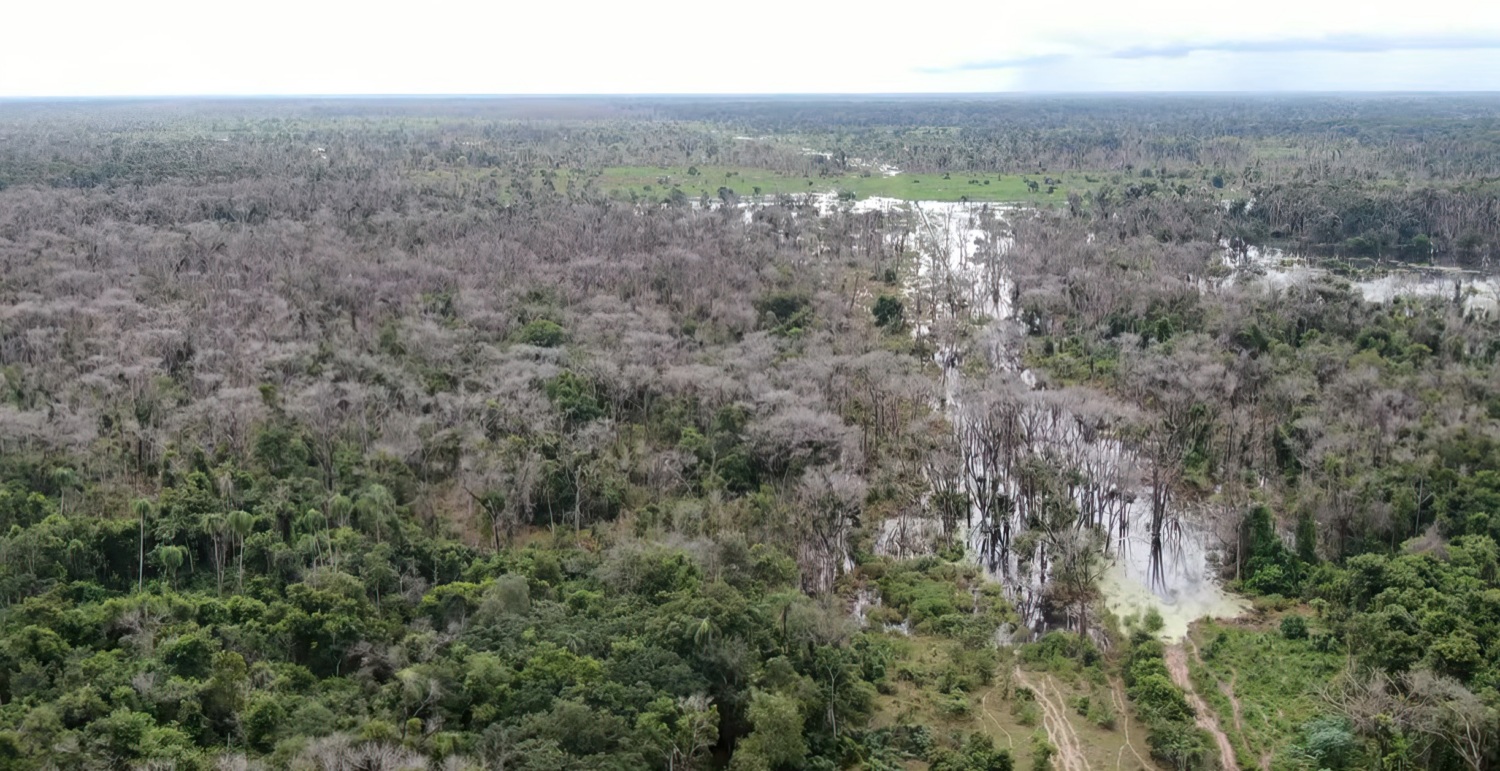
Meatpackers, soy sectors and retailers in Brazil have a pivotal role to play in food systems transformation to meet climate and nature goals. Food production and consumption in Brazil is responsible for 74% of the country’s greenhouse gas emissions. Agriculture and livestock production is the main driver of deforestation in Brazil, responsible for more than 97% of native vegetation loss over the past six years.
Although preliminary PRODES figures for 2025 show an overall decline in deforestation rates in the Legal Amazon, deforestation hotspots remain. In Mato Grosso state, the deforestation rate increased by more than a quarter in 2025 compared to 2024.
2025 was both the third hottest year on record, largely driven by human activity, and the target year to end deforestation in meat and soy supply chains. That target’s been missed, and the analysis reveals that too many meat and soy companies still don’t have control over their indirect supply chains.
Amazon Soy Moratorium
The DCF commitments of the companies are more significant after key traders deserted the Amazon Soy Moratorium (ASM) at the start of 2026. Weakening the ASM undermines one of the most effective tools available to prevent deforestation. Without this mechanism, deforestation in the Amazon could increase by up to 30% by 2045 (IPAM). Ending the Moratorium would also dismantle a proven legality monitoring system that also effectively targets illegal deforestation, as most non-compliant farms lack proper permits.
We are calling for:
- DCF commitments to be expanded across all ecosystems, applying a 2020 cut-off date for all biomes but the Amazon.
- In the Amazon, the sectoral approach of the ASM to be maintained and strengthened through the maintenance of the 2008 cut-off date, farm-level traceability and a commitment to zero legal and illegal deforestation
- Full traceability to be implemented across all suppliers—including indirect suppliers—to eliminate the blind spots that drive both legal and illegal deforestation.
- Transparency and accountability to be strengthened, including public alert and grievance mechanisms, accessible reporting, and credible, independently verified monitoring systems.
Ends
For more information or to arrange an interview please contact:
Carole Mitchell, Global Director of Communications
carole@mightyearth.org
+44 7917 105000
Notes to editors:
How companies scored
On track (above 100)
- Marfrig presents the most robust set of policies and practices to address deforestation in its value chain. It covers legal and illegal deforestation and conversion in all Brazilian biomes, adopts sector-recognized cut-off dates (July 2009 for the Amazon biome and December 2020 for the other biomes), and has a target year of December 2025. (137/150)
- Carrefour is the best performing retailer with ambitious commitments in line with sector standards. It has robust processes for its direct beef supply chain, but it acknowledges the challenges of its indirect supply chain. Like the beef supply chain, there is a DCF commitment covering all biomes for soy, but it is less explicit than beef and seems to apply only in the French stores. (124/150)
Middle of the road (below 100)
- Amaggi has positioned itself as DCF for its own farms since 2008 and aims to have a fully deforestation-free soy supply chain by December 31, 2025, but the challenge remains to scale verified farm-level traceability across indirect suppliers. (98/150)
- ADM aims to eliminate deforestation across its entire chain of direct suppliers by 2025, but among indirect suppliers the target date is 2027 in high-risk areas of the Amazon, Cerrado, Pantanal, and Chaco. (91/150)
- LDC claims to trace 98% of direct suppliers in Brazil in 2024 but admits having achieved only 62% of indirect supplier traceability to farm in priority regions of Brazil, in 2024. (88/150)
- COFCO has a DCF commitment of 2025, but this is weakened by its adoption of 2025 as the cut-off date. The Amazon is the exception where the cut-off date is July 2008, in line with the criteria of the Soy Moratorium. (85/150)
- Bunge stated that in 2024, 97% of its direct soy in priority regions (Brazilian Matopiba and MT, selected Argentinian states, and the Paraguayan Chaco) was DCF, but offers nothing about DCF volumes from indirect sources. (85/150)
Laggards (below 75)
- Minerva’s DCF commitment is partial as it includes only the elimination of illegal deforestation (across all biomes) with a target date of 2030. Information on cut-off dates is not explicit in the company’s documents. It engaged with the analysis and responded to its score of 71/150
- Cargill failed to engage, or to address its score of 63/150. It aims to eliminate deforestation/conversion by the end of 2025 in all Brazilian biomes, but the date for the rest of Latin America is 2030, raising concerns about Bolivia where soy is driving rampant deforestation.
- Assaí Atacadista is doing better on its beef supply chains, with a DCF target of 2025, including legal and illegal deforestation in the Amazon and the Cerrado. Cut-off date for DCF is May 2009 in the Amazon and December 2020 in the Cerrado. No DCF commitment for its soy supply chains. (57/150)
- JBS’s DCF commitments were found to be fragmented, with ineffective implementation and poor disclosure. Eliminate deforestation (legal and illegal) in the Amazon by 2025 for both direct and indirect suppliers, with a 2008 cut-off date. JBS ignored the questionnaire and failed to respond to its score of 51/150
- GPA has a meat procurement policy that includes a DCF commitment with targets for 2026 for direct supplying farms and 2030 for indirect suppliers. The company’s DCF commitment only covers the Amazon and Cerrado for both legal and illegal deforestation. In the soy value chain, no DCF commitments or traceability plan were identified. (49/150)
Off track (less than 20)
- ALZ Grãos is the worst ranked soy trader, lacking the minimum standards developed by the sector, and without a clear and explicit DCF commitment. (17/150)
- Grupo Mateus failed to score any points. It does not publish sustainability reports, and there isn’t a corporate document addressing the DCF commitments analyzed in the Mighty Earth/IDEC report. The retailer didn’t reply to the questionnaire. (0/150)
Methodology
The fourteen companies were assessed based on an adaptation of the minimum DCF criteria proposed by The Nature Conservancy (TNC), World Wide Fund for Nature (WWF), Imaflora and World Resources Institute (WRI). Companies were sent tailored questionnaires and a scoring system was created based on the responses, varying according to the robustness and quality of the practices or policies adopted. Further data was collected to verify the responses or to complete the questionnaires where companies did not reply. The analysis covered sustainability reports, socio-environmental and climate policies, supplier codes of conduct, purchasing policies, and other corporate documents available online. All stages of the analysis took place between August and November 2025.
Marfrig, Minerva and Carrefour submitted comprehensive responses, while retailers GPA and Assaí provided partial information. The soy trader LDC responded but did not offer substantive input. The remaining companies did not reply. Companies scored out of 150 marks and ranked accordingly.
In November of last year, before COP30 in the Brazilian Amazon, the analysis was shared with each company, with a request to transparently report their DCF progress and publicly reaffirm support for the ASM and its 2008 cut-off date during the COP30.
Half of the companies selected were soy traders controlling up to 60% of Brazil exports. The meatpackers, JBS, Marfrig and Minerva represent more than a quarter of the domestic market share in Brazil, and the majority of exported beef. The four largest supermarkets make up more than 40% of the Brazilian market share.
About Mighty Earth
Mighty Earth is a global advocacy organization working to defend a living planet. Our goal is to protect Nature and secure a climate that allows life to flourish. Our team has achieved transformative change by persuading leading industries to dramatically reduce deforestation and climate pollution throughout their global supply chains in palm oil, rubber, cocoa, and animal feed, while improving livelihoods for Indigenous and local communities across the tropics. www.mightyearth.org
About IDEC
The Instituto de Defesa de Consumidores (Idec) is a Brazilian civil society organization dedicated to defending consumer rights and promoting sustainable, fair, and transparent markets. www.idec.org.br