Volkswagen Urged to Investigate Deforestation Risks in its Indonesian Nickel Supply Chain
See related media articles here: Mediapart; The Guardian; Voxeurop; InfoLibre; Süddeutsche Zeitung; Domani
See interactive supply chain story here
A new investigation by Voxeurop, co-published with several media outlets, exposes deforestation, threats to the endangered anoa (tiny adorable wild cattle), and concerning human rights risks connected to Volkswagen, Huayou and CATL’s electric vehicle battery supply chain in Indonesia. In a grievance, Mighty Earth and WALHI Southeast Sulawesi call on the European automaker to investigate its supply chain, and take tangible action to address potential environmental and human rights issues in its nickel supply chain.
Volkswagen sources the majority of its EV battery cells from Chinese battery giant CATL, and its South Korean competitor LG. Both LG and CATL obtain cathode materials from Zhejiang Huayou Cobalt, which operates a major nickel refining facility in Indonesia. Huayou also lists Volvo, Ford, General Motors, Tesla, BMW, Stellantis and Hyundai as end users of its cathodes. Shipment data also shows CATL battery shipments in 2024 and 2025 to the US-based factories of Volvo, Ford, General Motors, Tesla and Mercedes-Benz, as well as to BMW and Stellantis in previous years. Mighty Earth has established that two nickel mines in Sulawesi, PT Hengjaya Mineralindo and PT Sulawesi Cahaya Mineral (SCM), supply nickel ore to Huayou subsidiaries.
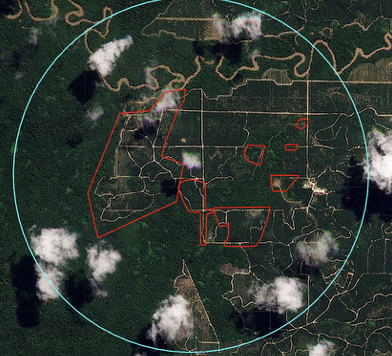
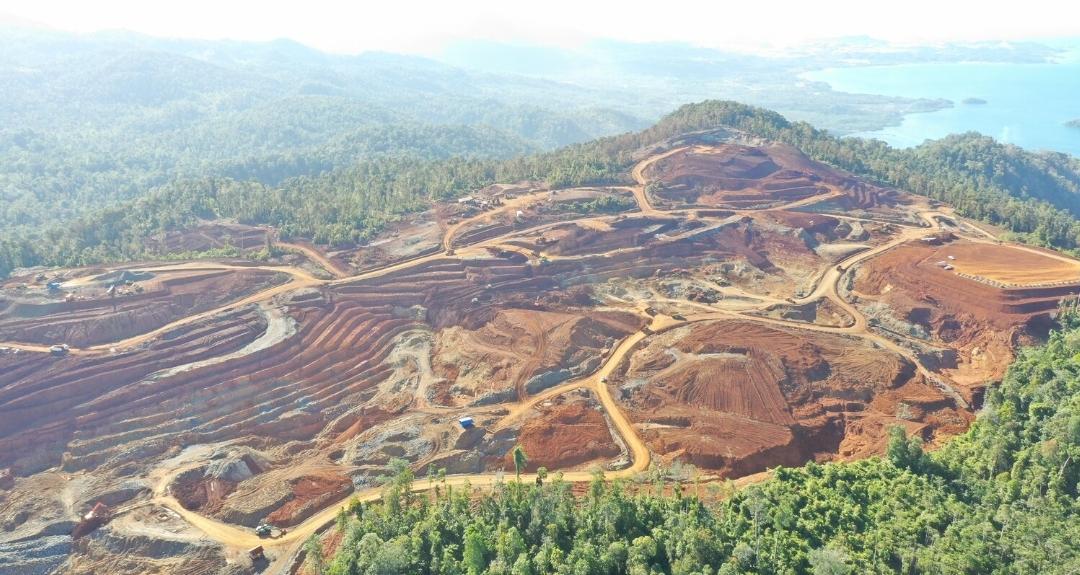
Complementing Voxeurop’s investigation, Mighty Earth’s analysis found approximately 4,083 hectares of canopy loss across the two concessions between 2001 and 2025 – an area equivalent to around 5,700 football fields. Forest loss accelerated sharply in recent years: 74% of canopy loss inside SCM occurred between 2021 and 2025, while 27% of Hengjaya’s loss occurred during the same period, as Huayou’s Morowali nickel processing operations ramped up. Satellite imagery shows mine pits and haul roads replacing forest.
The environmental concerns extend beyond forest loss. Both concessions overlap the Routa Key Biodiversity Area, a site of approximately 142,000 hectares recognised for its biodiversity importance. Mighty Earth’s analysis finds that the two mines overlap around 354 hectares of the KBA. The area provides habitat for the endangered anoa (Bubalus depressicornis) and other species of wildlife found nowhere else on earth.
The grievance also highlights human rights concerns connected to Volkswagen, Huayou and CATL, through their links to PT Sulawesi Cahaya Mineral (SCM). Walhi Southeast Sulawesi have documented the false criminalization of three community members from Routa District, who were reported to the police by the company following protests to protect their land, and were subsequently arrested. The alleged use of legal instruments to intimidate communities to give up their land, connected to VW’s suppliers would severely undermine their commitments to the UN Guiding Principles on Business and Human Rights (UNGPs), which require every company to respect human rights, conduct human rights due diligence, and identify, prevent, mitigate, and remedy negative impacts on community rights caused by its business activities or business relationships.
The findings raise questions about Volkswagen’s responsible sourcing commitments. Volkswagen’s Code of Conduct states committed to ensure the “protection of the natural ecosystem, especially […] endangered habitats of wild animals,” and that “supply chains are free of deforestation […]”.Its Responsible Supply Chain System also references alignment with IUCN recommendations and the OECD Guidelines for Responsible Business Conduct, which encourage the protection of forests, biodiversity, and the lives and livelihoods of Indigenous Peoples and of local communities.
Mighty Earth and WALHI Southeast Sulawesi are calling on Volkswagen, CATL and Huayou to investigate the findings and prove either that nickel entering Volkswagen’s supply chain does not originate from these mines, or that the findings are incorrect.
As demand for EVs grows, the transition away from fossil fuels cannot come at the expense of forests, biodiversity and communities. Volkswagen and all EV manufacturers should be able to demonstrate where the nickel in its supply chain comes from, and that its responsible sourcing commitments are being upheld.