Cow in the Room: Big Meat’s “Climate Crime”
New Mighty Earth analysis of the world’s largest beef companies reveals only one in ten discloses its super polluting methane emissions and not a single company has a plan to meet the UN-backed target to cut methane by 30% by 2030
Link to report here
New analysis by Mighty Earth finds that the world’s largest meat companies are failing to tackle methane emissions from their industrial livestock operations, masking the true scale of their climate harms and negative impact on global heating. None of the companies report methane emissions directly associated with their meat production, and not a single company has a plan to cut methane by 30% by 2030, in line with the UN-backed Global Methane Pledge. Only one company, Marfrig, prior to the publication of this report, committed to a methane reduction target and disclosure.
The study looked at the ten top beef companies in the world across four regions: North America, South America, Europe, and Asia. Most companies recognize the outsized role of livestock methane in global heating, yet for the most part are doing nothing to address it. Animal-based food production is responsible for 57% of all food-production emissions, with over 80 billion land animals slaughtered for meat annually. Manure management and enteric fermentation in ruminant animals such as cattle and sheep, which produces methane as a byproduct of the digestive process, represent 32% of human-caused methane emissions.
The good, the bad and the ugly
- None of the companies assessed have a specific commitment to reduce absolute methane emissions across value chains by at least 30% or recommended 45% by 2030, relative to a 2020 baseline (or earlier).
- Marfrig is the only company with a dedicated methane-reduction target and has developed an action plan to achieve a 33% reduction by 2035, relative to 2019 levels. However, because the target itself falls short of the reductions required, the plan is insufficient.
- Only half the companies assessed have net-zero commitments, and most have adopted weak, loophole-filled language that shields them from accountability.
- Danish Crown, Marfrig, Minerva and Vion Food Group reported on their absolute emissions for the previous year and referenced – without contradictory evidence – that their calculations were line with the GHG Protocol.
- Cargill and JBS understate their total emissions by omitting emissions associated with land-use change. In the case of JBS the difference is estimated to be almost 85 million tons of CO2e, or an approximately 54% additional share of JBS’s reported GHG emissions for 2023.
- Marfrig is the only company which disclosed methane emissions separately for 2024. This was in response to Mighty Earth’s outreach regarding the present report. Minerva, Cargill and NH Foods only reported Scope 1 methane emissions, as CO2e.
- Not a single company discloses their total methane emissions coming directly from meat products.
- Danish Crown is the only company to offer global slaughter numbers.
- None of the companies assessed have a plant-based alternative protein production targets.
Gemma Hoskins, Global Climate Director at Mighty Earth said:
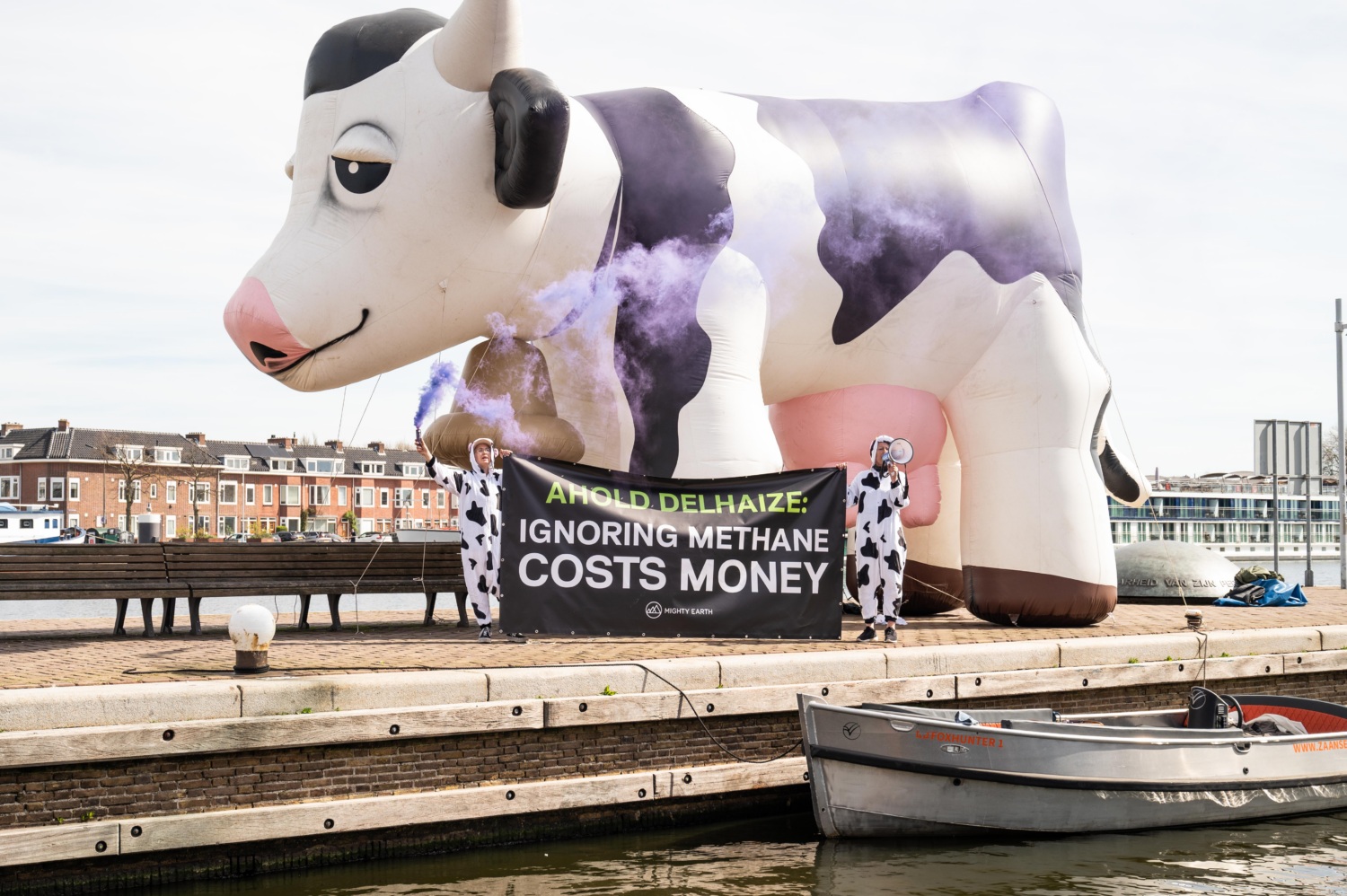
“It’s tantamount to climate crime that most meat companies are stubbornly refusing to address the cow in the room: methane. Methane is a powerful greenhouse gas that has an outsized negative impact on the climate. Deep and rapid cuts to methane emissions would quickly slow down global heating and help communities on the frontline of the climate crisis.”
“It is entirely possible for meat companies to disclose their methane emissions, and to develop methane reduction strategies. The world’s second largest beef company, Marfrig, showed this can be done, days before the launch of this report, and committed to a 33% cut in methane emissions by 2035. Now, we need the rest of the super polluting meat sector to follow Marfrig’s lead.”
“Cattle cause higher emissions than any other food source, and beef production is a key driver of deforestation. To curb methane emissions, we need a systemic shift away from industrial meat production to sustainable farming practices and a transition to diets with less meat and more plants for the health of people and planet.”
Solutions: the protein transition
Plant-based proteins represent one of the most effective ways to curb methane emissions and land use pressures, while improving diet-related health outcomes.
Alternative/Plant-based proteins are forecast to reach 11% of global protein consumption by 2035, potentially saving 0.85 gigatons of CO2e by 2030 – equivalent to a 95% reduction in aviation emissions.
Profundo estimates that reducing beef, pork, and chicken output of the twenty leading meat producers by 30% and replacing it with alternative proteins would cut GHG emissions by an amount comparable to the annual emissions of The Netherlands.
Mighty Earth is calling for companies to:
- Publicly report methane across Scopes 1, 2 and 3 annually and accurately.
- Commit to reduce methane emissions by at least 30% by 2030.
- Commit to Net-Zero by 2040, aligned with the 1.5°C goal of the Paris Agreement.
- Set targets to invest in alternative proteins and increase the proportion of plant-based products to meat products.
- Increase finance for farmers to implement agroecological practices and methane reductions.
ends
For more information or to arrange an interview please contact:
Carole Mitchell, Global Director of Communications (London)
[email protected]
+44 7917 105000
Gemma Hoskins, Global Climate Director (London)
[email protected]
Notes to Editors
Methane matters
Methane is a climate superheater with a greenhouse gas warming effect more than 80 times greater than CO2 in the short term and is responsible for 30% of the world’s global heating. Agriculture accounts for around 40% of global methane emissions, most of which come from livestock, particularly cattle which belch methane through enteric fermentation. Methane is short-lived, staying in the atmosphere for about 12 years, meaning deep and rapid cuts to methane emissions would slow global heating, and help mitigate the worst impacts of the climate and nature crisis.
Methodology
- The companies were selected based on a combination of factors, including annual revenue, estimated methane emissions, and market dominance in the global meat sector, ensuring a representative sample of major industry players in four key producing regions: North America, South America, Europe, and Asia.
- Each company was evaluated solely on publicly available information published on its own website (including sustainability and climate reports, annual reports, corporate disclosures, and press releases). For each company, the most recent annual or sustainability reports (2023–2024) were used.
- The research was conducted between 14 and 27 October 2025.
- The companies were contacted with their results and given the opportunity to submit additional information available on their website for our review. Four companies – Danish Crown, Marfrig, Minerva Foods and Vion Food Group – replied to the outreach. Their responses are available here.
- Companies were assessed against 14 key indicators, grouped into five categories reflecting core areas of methane-related climate performance.
- Each indicator was assigned one of three possible scores based on the evidence found: The company meets high-performance criteria; The company meets intermediate-performance criteria; No evidence was found that the company sufficiently meets the indicator.
About Mighty Earth
Mighty Earth is a global advocacy organization working to defend a living planet. Our team has achieved transformative change by persuading leading industries to dramatically reduce deforestation and climate pollution throughout their global supply chains in palm oil, rubber, cocoa, and animal feed, while improving livelihoods for Indigenous and local communities across the tropics. www.mightyearth.org