CEO Note: RVs shouldn’t kill orangutans
By Glenn Hurowitz, Founder & CEO
For more than a year, the biggest recreational vehicle companies in the United States – Winnebago, Thor, Forest River – have been hiding from environmental groups and media outlets looking for answers about their connections to rainforest-destroying, orangutan-killing meranti plywood from Indonesia. This is a big deal: the RV industry is the largest consumer of tropical wood in the US, and the US is the largest importer of tropical wood from Indonesia. The RVs’ structure is almost entirely tropical hardwood. Inside the industry, they’re known as “boxes of meranti on wheels.”
The consequences of the RV industry’s sourcing has become even more apparent and tragic in recent days. Over the last few years, Mighty Earth investigated one of the worst cases of deforestation – 40,000 hectares destroyed, including orangutan habitat on carbon-rich peatlands on the island of Borneo. This information helped persuade the Indonesian government to step in and halt further deforestation.
The company that destroyed the forest is called Mayawana Persada, and the meranti wood harvested there (also called Lauan) is exported to California and eventually used in the manufacturing of RVs. Our investigation made the front page of the New York Times, and prompted many customers to get in touch with the RV companies to demand change.
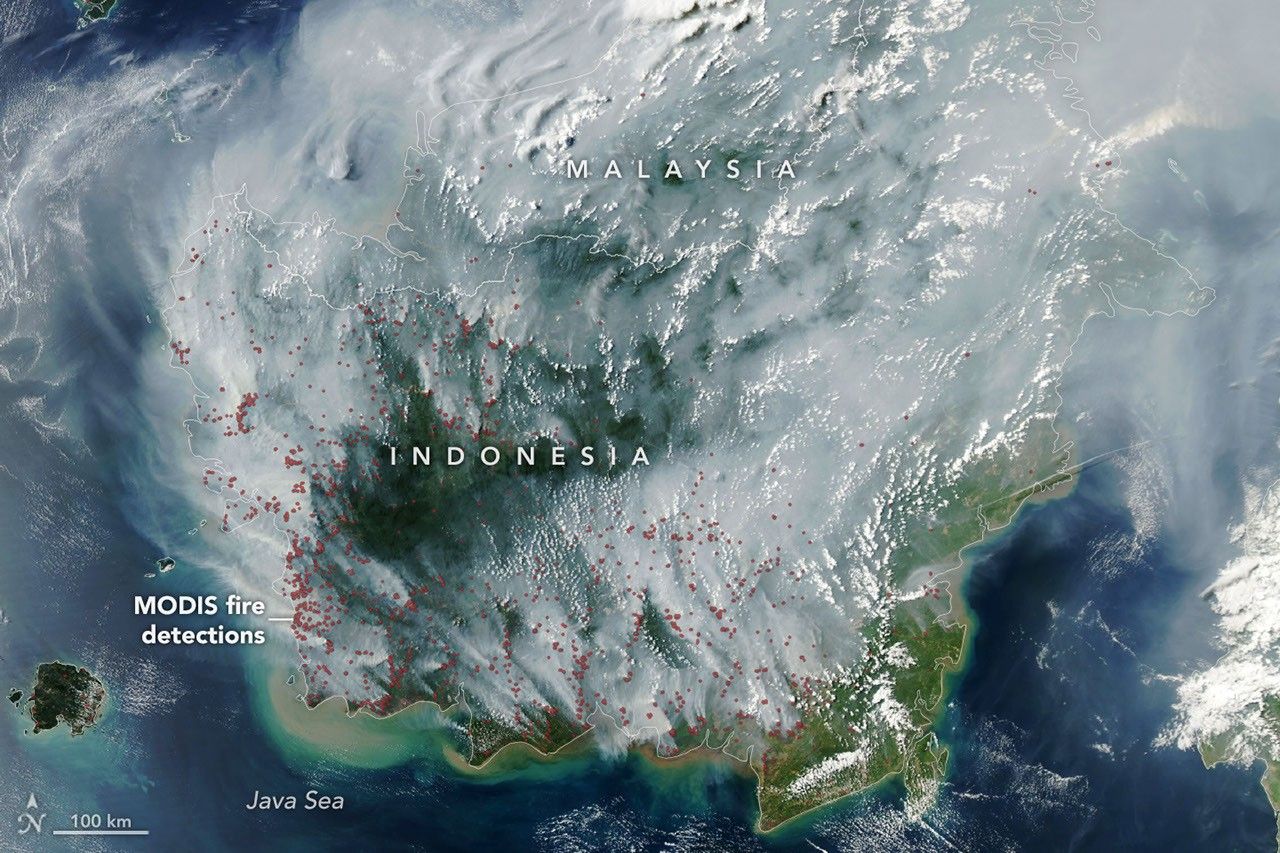
However, this year’s “Godzilla El Niño” means that previously deforested areas, and especially ones like Mayawana Persada that sit atop peatlands, are exceedingly vulnerable to fires.
We and our allies urged the company to dam the canals and restore the peat, but they failed to act in time, and now that same peat is burning.
Local allies have seen orangutans in farmland, likely trying to flee the fires. In another part of West Kalimantan, an orangutan, whose rescue and photos of him being given oxygen have gone viral, has since died from smoke inhalation.
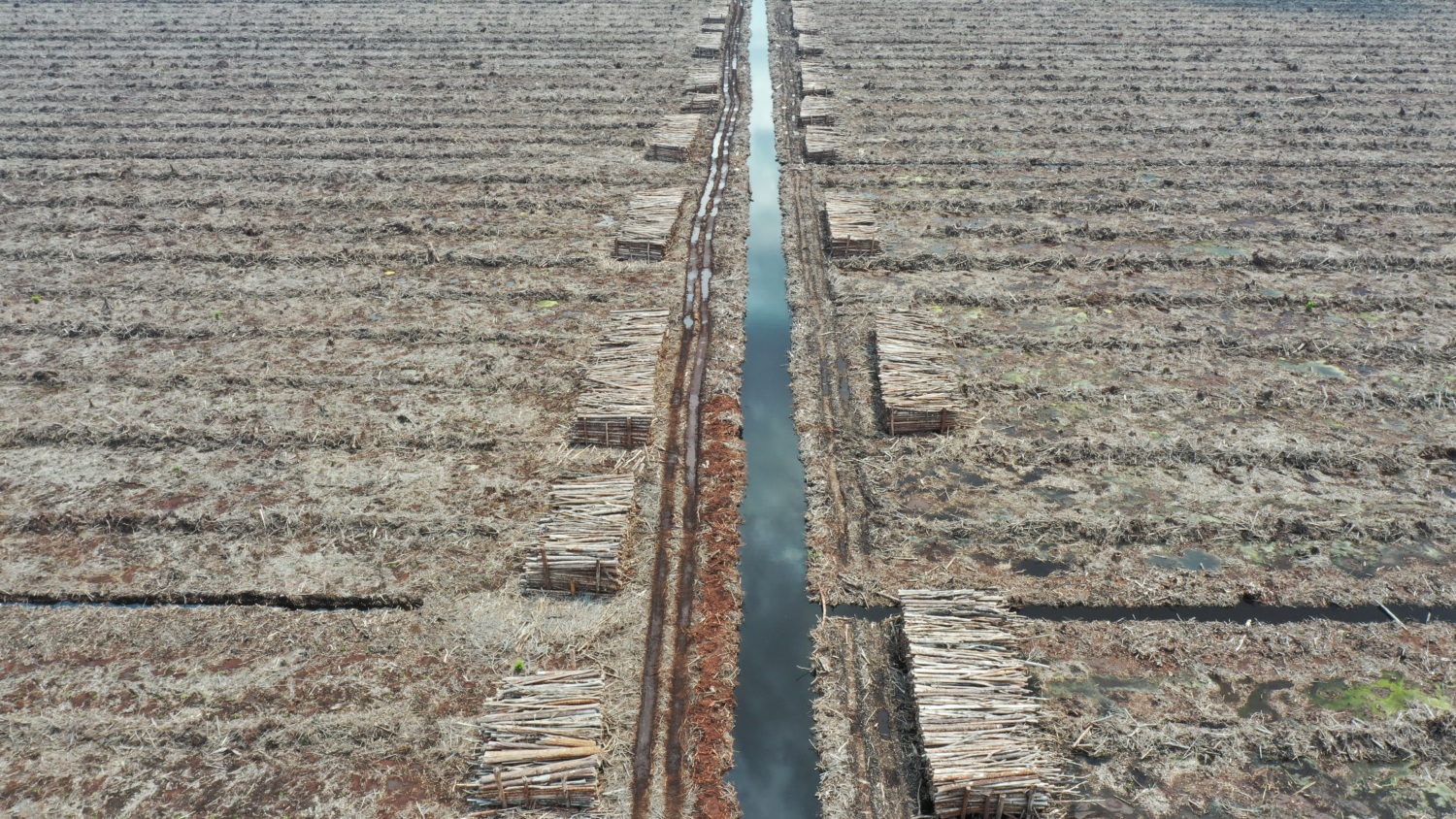
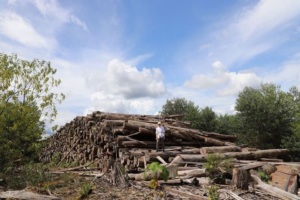 A log pile in Mayawana Persada.
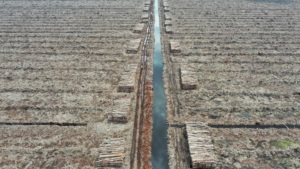 Peatland drainage canal and clearing in Mayawana Presada. Image by Satya Bumi.
We’re pushing the RV companies to act. We’re asking them to only buy Forest Stewardship Council-certified wood – a simple step that big retailers like Lowe’s and Home Depot have already implemented. We’ve written them letters, visited their offices, and escalated with billboards and ad trucks, and asked allies in Congress to weigh in. We’ve publicly proposed alternative products to the problematic wood – even a composite with a far lower footprint.
But we’ve been met with silence – a silence that we rarely encounter even from some of the world’s most notorious polluters.
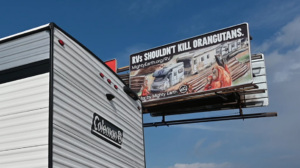 Billboard in Elkhart, Indiana, as part of Mighty Earth’s ongoing campaign targeting leading RV manufacturers.
All the major RV companies are based in Elkhart, Indiana. Mighty Earth’s Indiana organizer and our volunteers in the state have been working hard on the ground. Last week, the local ABC TV station in Indiana aired an extraordinary exposé of how their hometown industry is destroying orangutan habitat and has resisted even the most basic environmental safeguards. You can watch it here. Reporter Annie Kate did an outstanding job, to such an extent that it amazed me that such quality journalism was still possible on local American television.
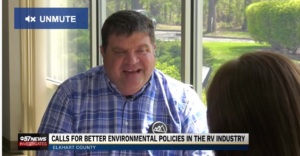 Mighty Earth Indiana Director Mike Oles interviewing with ABC 57 News.
We’ve heard from insider sources that this piece and other elements of the campaign are landing – and that at least some of the companies are beginning to understand that their customers don’t want to visit America’s natural wonders rolling in a Nature-destroying van.
The Godzilla El Niño is showing how destruction of nature can have horrid impacts even years later. Amidst this great crisis, we need all companies whose supply chains connect to Nature to act, and governments to step in to protect their people. You can support the firefighting teams battling the blazes in and around Mayawana Persada here.
—
© 2026. The text of this article is openly licensed under Creative Commons (CC BY-ND 4.0); you are free to copy and redistribute or republish the article in its entirety with attribution and credit.