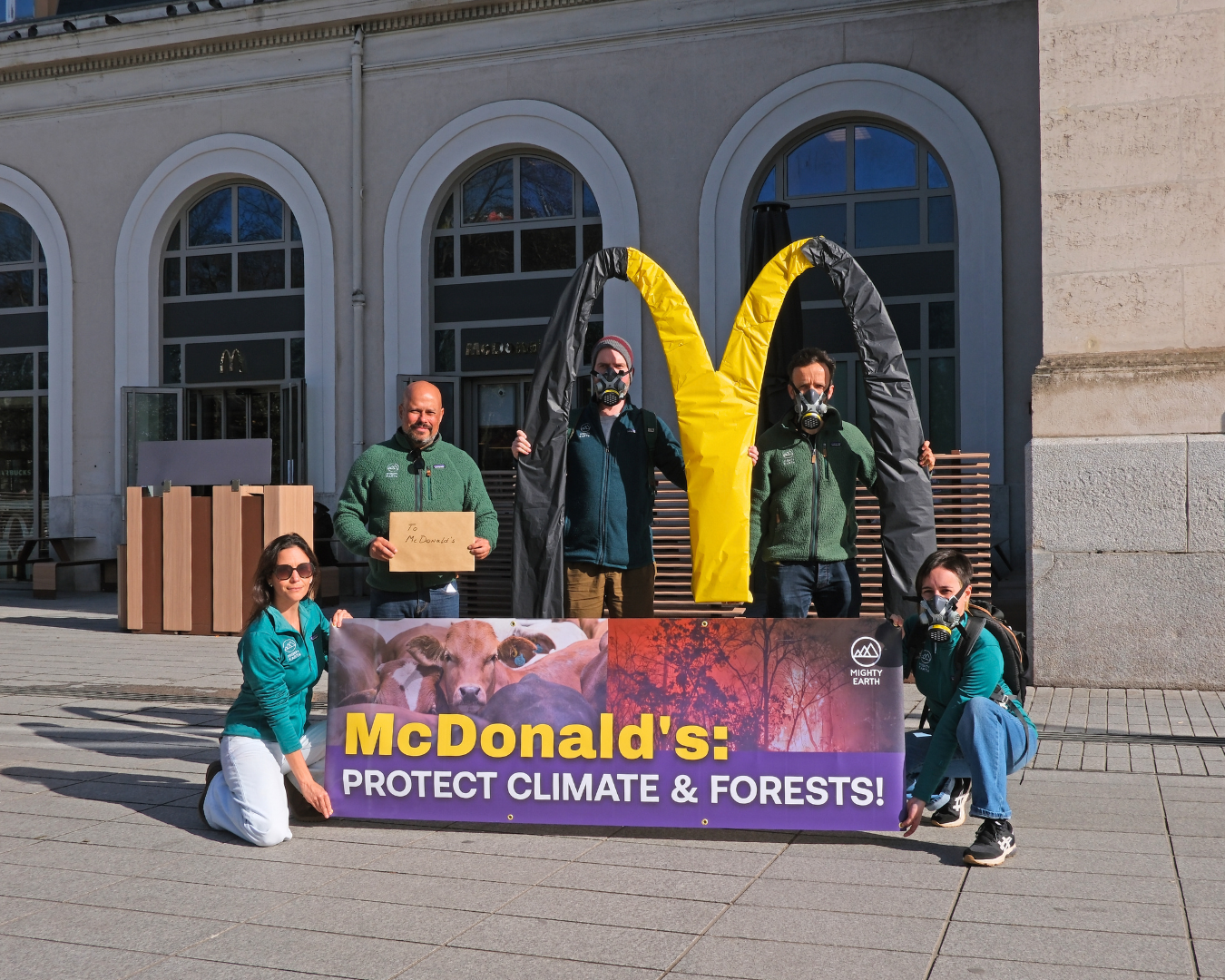
McDonald’s Big McMess
Time to Clean up its Nature & Climate Impact
Overview
McDonald’s is the largest fast-food restaurant in the world, with $26.9 billion in revenue in 2025. It serves 70 million people a day in more than 100 countries. Due to its size and global reach, McDonald’s could drive sustainable and just practices in food systems around the world. Instead, the McDonald’s menu — heavily reliant on beef, chicken, and dairy — is contributing to a climate and nature crisis. Last year, McDonald’s emitted about 60.5 million metric tons of CO2 – that’s the equivalent of 16 coal-fired power plants.
McDonald’s has publicly committed to:
- Reduce greenhouse gases by 2030 by 16-50.4% (depending on the category).
- Net-zero emissions across its entire business and value chain by 2050.
- A deforestation-free supply chain by 2030.
Yet McDonald’s emissions are trending upwards and are not on track to meet those goals. Its major beef and soy suppliers — including JBS and Cargill — have been repeatedly linked to Amazon deforestation. And as McDonald’s pursues its “Accelerating the Arches” global expansion strategy, the gap between the company’s climate promises and its growth strategy is getting wider. McDonald’s can and must do better — this is a company with the scale and influence to make a real difference.
What We’re Asking McDonald’s To Do
Scale diverse protein options globally. McDonald’s already offers plant-based options in France, Germany, and the Netherlands and the UK. It’s time to bring that ambition to every market — with real investment in marketing and competitive pricing.
Disclose and reduce methane emissions. Beef production releases methane — a greenhouse gas 86 times more powerful than CO₂ over 20 years. McDonald’s doesn’t mention methane once in its annual climate report. That needs to change, along with a concrete reduction target and action plan.
Eliminate deforestation from global supply chains. Full traceability and transparency for beef and soy. Drop suppliers linked to deforestation. Publicly defend the Amazon Soy Moratorium – the voluntary agreement McDonald’s helped create in 2006 that is now under threat. And ensure deforestation and land conversion are no longer occurring along coastlines and catchments, which can harm sensitive habitats like the Great Barrier Reef.
Our Message for NY Climate Week — McDonald’s is Killin’ the Planet
New York Climate Week brings together politicians, corporate executives, United Nations delegates, nonprofits, and thousands of others for a week to discuss the climate, deforestation, and other pressing issues for our planet.
This year, we wanted everyone to understand the impact McDonald’s has on the climate, and vulnerable landscapes like the Amazon Rainforest and Great Barrier Reef.
Visit the streets surrounding the Javits Center, in midtown Manhattan, to see our message for McDonald’s.
WE BROUGHT OUR CAMPAIGN TO THE UNESCO WORLD HERITAGE CONFERENCE
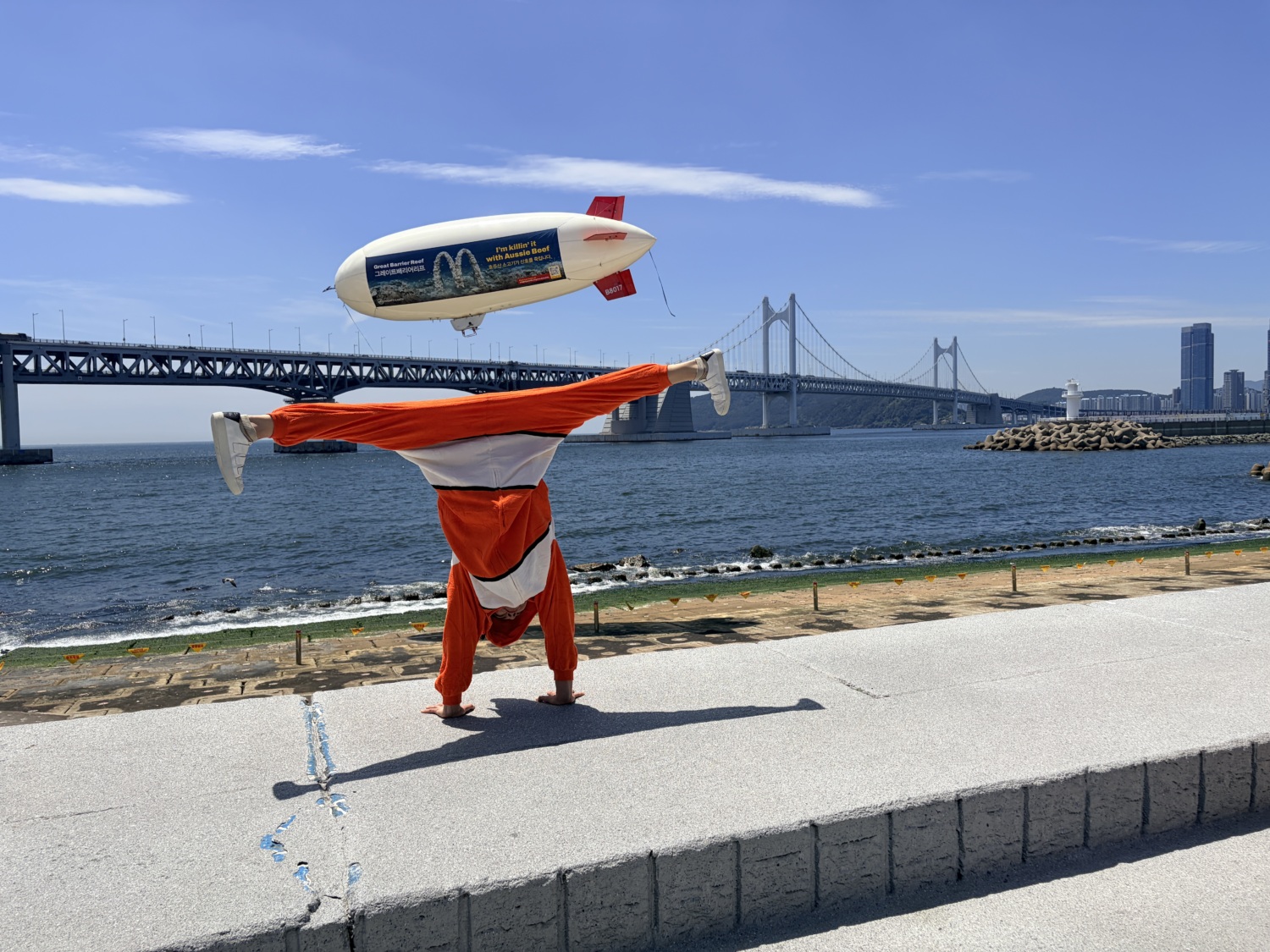
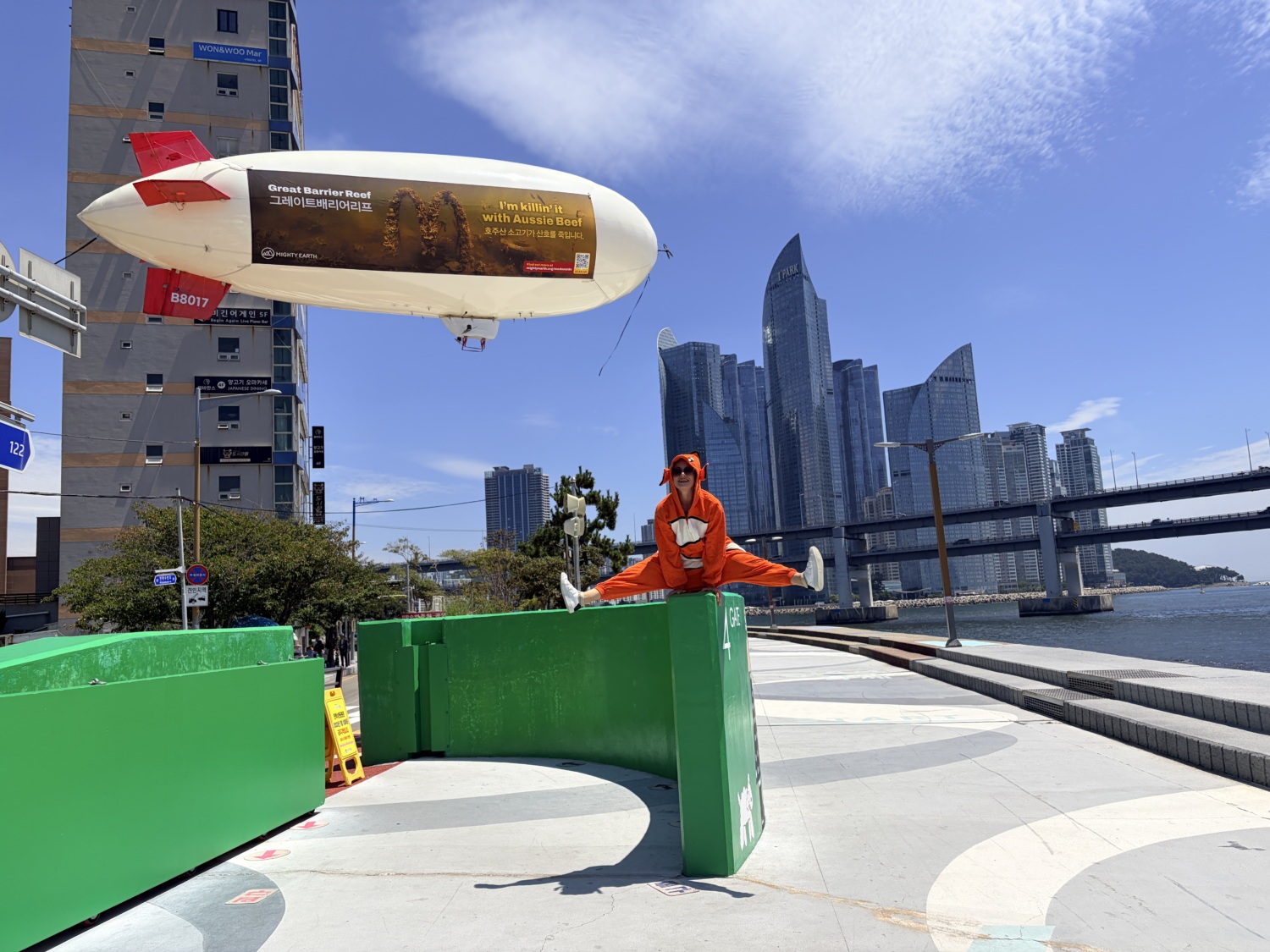
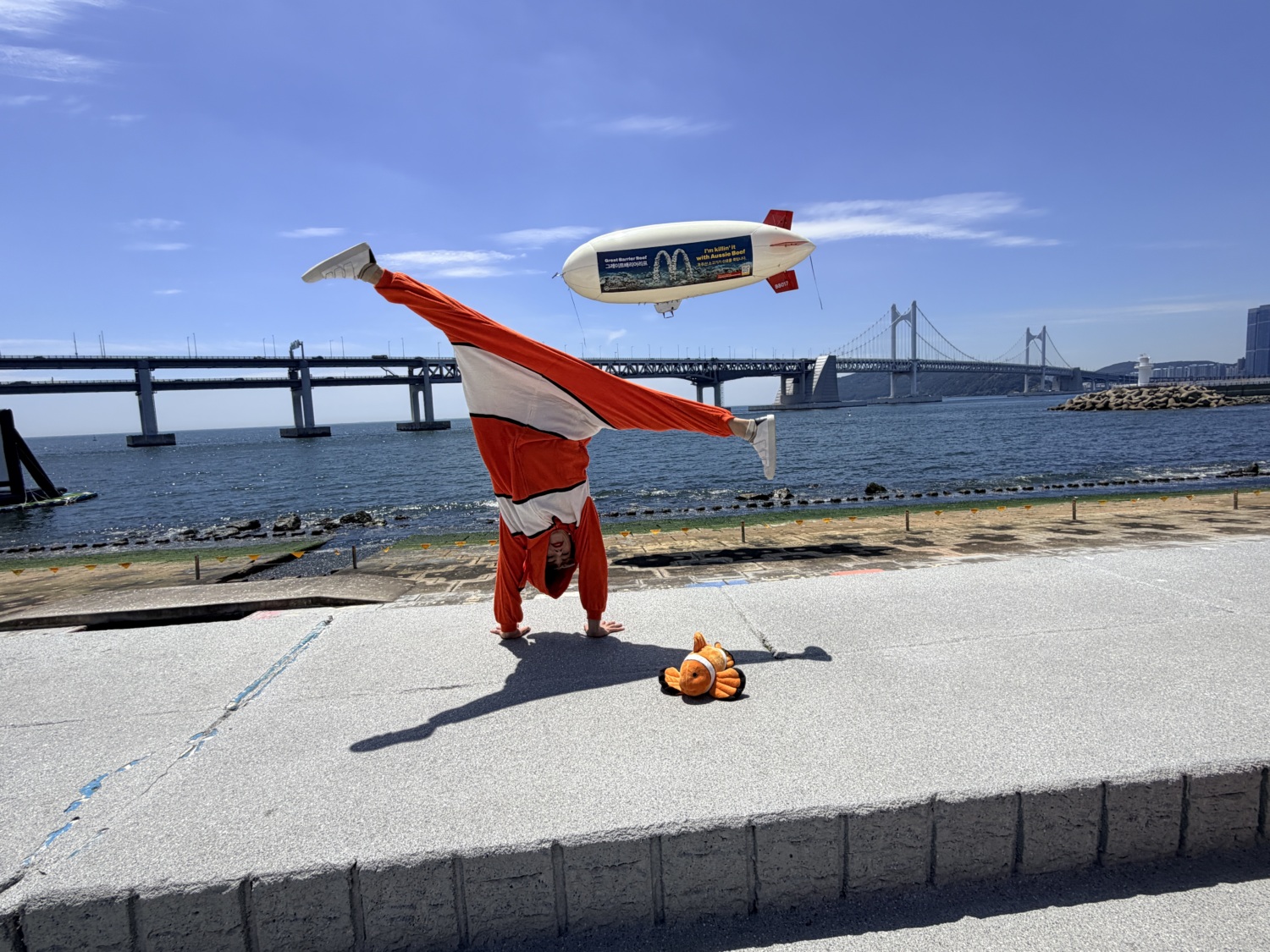
In July 2026, we travelled to Busan, South Korea, where delegates from nearly 200 countries are gathering to discuss how to protect the world’s most precious natural and cultural heritage sites. We went with one message: protecting World Heritage sites means tackling the corporate drivers of climate change and deforestation.
What does McDonald’s have to do with it?
The dual whammy of McDonald’s climate and nature impact affects world heritages sites around the world. According to the UN, climate change and other human-induced problems like deforestation threaten 60% of World Heritage forests and marine sites. The Great Barrier Reef is an unfortunate example.
Each year, McDonald’s releases more climate-warming emissions than 75% of the world’s nations. These climate-warming emissions increase sea temperatures, which results in mass bleaching of coral reefs, killing underwater ecosystems like the Great Barrier Reef. To make matters worse, McDonald’s beef supply chain is linked to degraded water quality that smothers the Great Barrier Reef. It is estimated that 65%-70% of McDonald’s stores worldwide sell Australian beef. The beef industry in Australia drove more than 700,000 hectares of deforestation in the water catchments for the Great Barrier Reef between 2018 -2023. Without tree roots to stabilize soil, erosion occurs on deforested land, and soil flows into rivers, eventually dumping hundreds of thousands of tons of mud onto the reef, smothering and killing the corals.
Our message to UN Delegates
Protecting World Heritage doesn’t stop at the boundaries of UNESCO sites. It also means holding major corporations accountable for the climate and deforestation impacts of their supply chains. We brought this message directly to international delegates in Busan: if we want to protect places like the Great Barrier Reef, companies like McDonald’s must dramatically reduce their climate and nature footprint.
We Went to Las Vegas to Give McDonald’s an Award
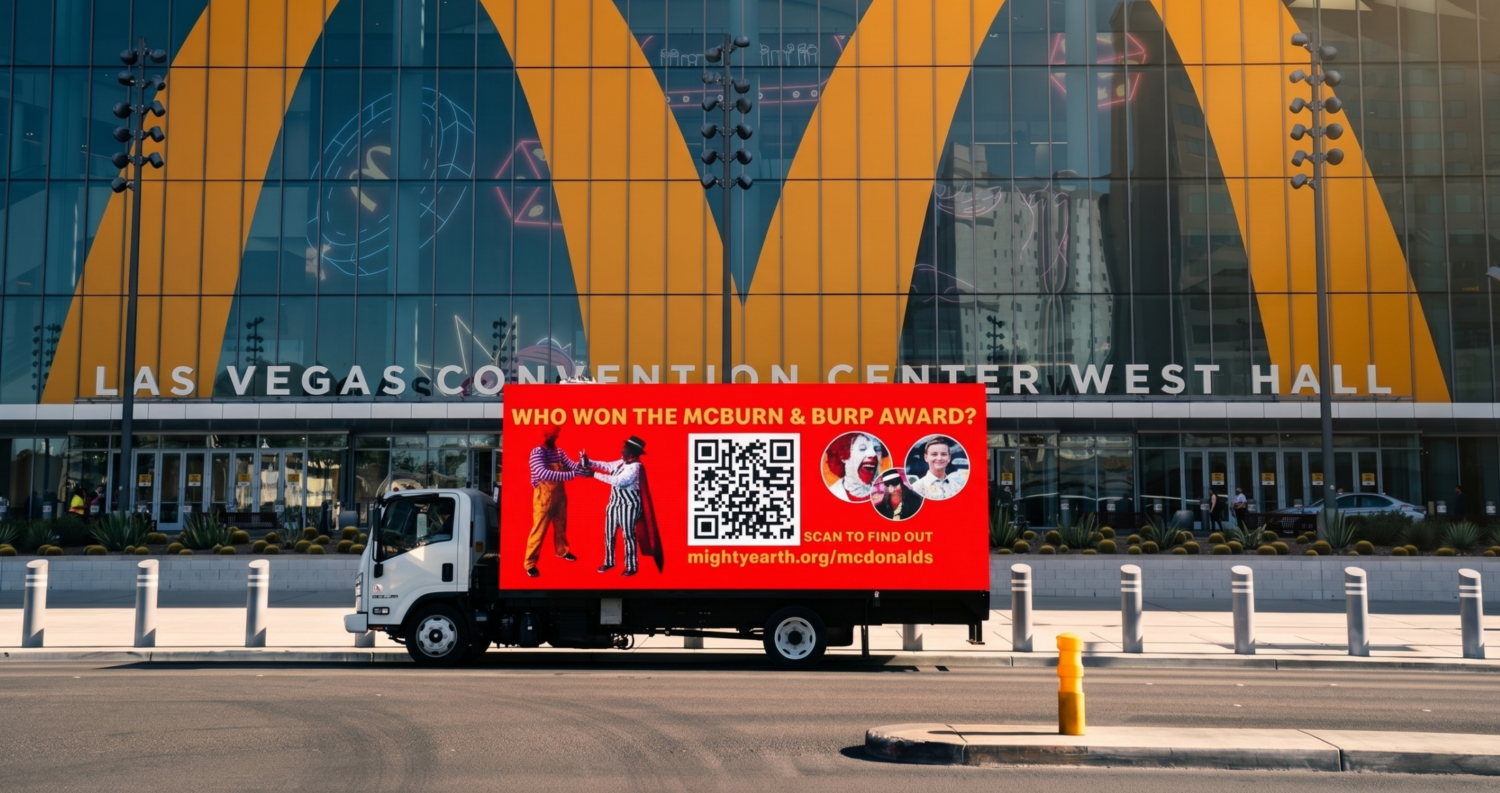
In June 2026, McDonald’s held its Worldwide Convention in Las Vegas to plan for the future of the brand. 15,000+ franchisees, suppliers, and corporate staff from around the world convened at the Las Vegas Convention Center. We showed up too. We wanted to make sure the “McFamily” knew the world is watching.
McBurn & Burp Award
Randy McMethane and the Land-Burglar try to present the inaugural Burp & Burn Award to CEO Chris Kempczinski — for making an extraordinary mess of McDonald’s climate and nature commitments. Then we took to the Las Vegas Strip and asked people what they knew about McDonald’s climate impact.
We’ve Been Trying to Have a Conversation
Mighty Earth has made repeated attempts to connect with McDonald’s corporate headquarters. We have written to CEO Chris Kempczinski directly. We are still waiting for a response.
McDonald’s has the size, the resources, and the reach to be a genuine force for climate and nature. We’re calling on the company to step up — and we’re calling on you to help make that happen.

We weren’t invited into the McDonald’s Worldwide Convention, but we still made an appearance.
WE HEARD PEOPLE ON THE STREETS OF LAS VEGAS
We spoke with dozens of people about the deforestation and climate impact of McDonald’s menu. Consumers are alarmed that McDonald’s beef and soy supply chains are linked to deforestation, and that McDonald’s has a climate impact greater than the country of Norway. See their reaction:
Ver essa foto no Instagram
Ver essa foto no Instagram