JBS caught buying cattle from farms in Amazon with recent deforestation fire alerts
New analysis by Mighty Earth finds the Brazilian meat giant bought cattle directly from two farms in the state of Pará, after Brazil’s public deforestation alert system detected recent fires at the locations, signaling a major blind spot in the meatpackers’ beef supply chain monitoring.
Link to report in English / Português
Leia este comunicado à imprensa em português
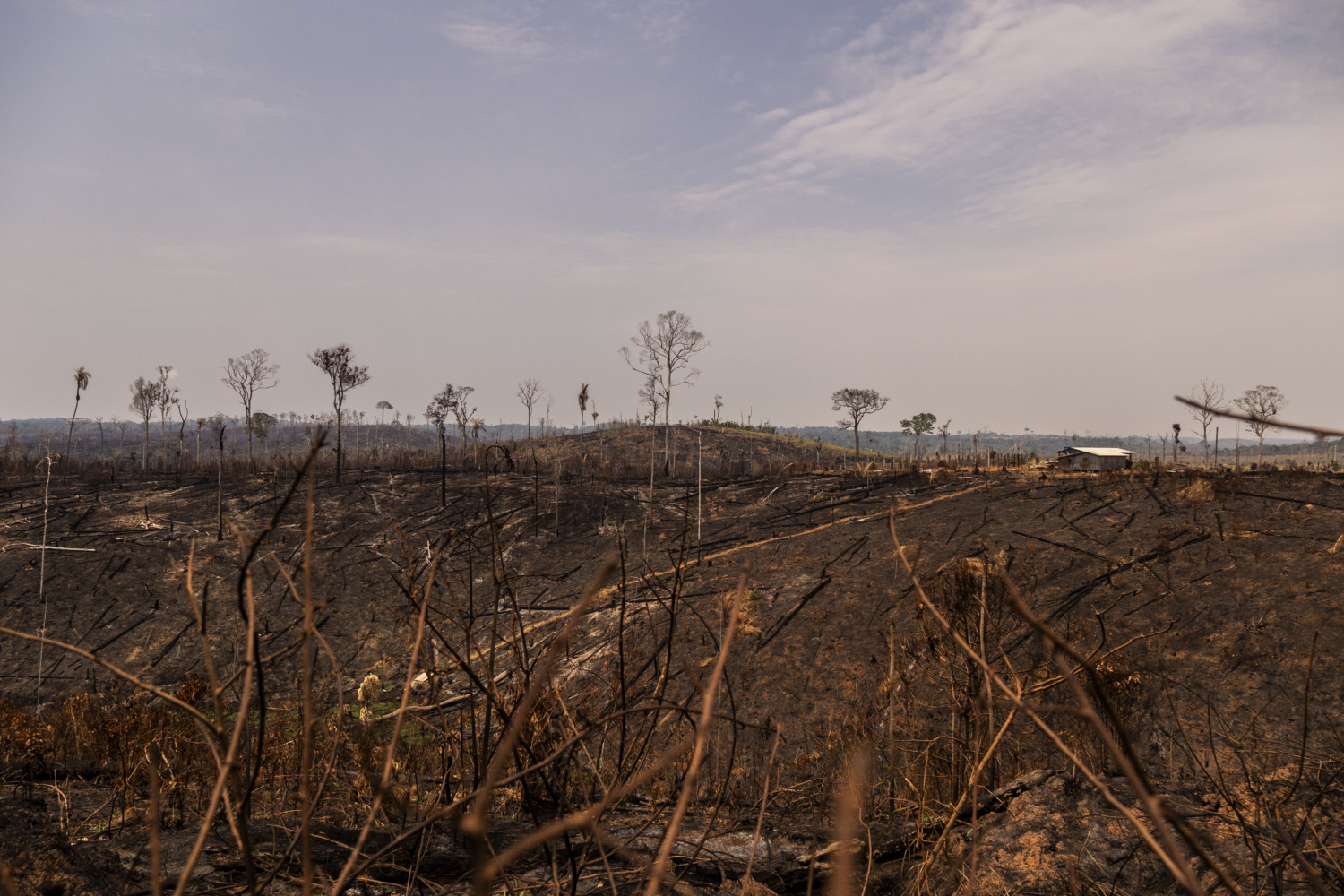
A new report by Mighty Earth, through its Rapid Response monitoring program in partnership with AidEnvironment and Repórter Brasil, reveals that the world’s largest meat company, JBS, has been caught buying cattle from two direct supplier farms in the Amazon rainforest with recent deforestation fire alerts. The farms were linked to nearly 1,400 hectares of deforestation in 2025 and between the two locations 89 fire alerts were recorded. Both farms in Pará supplied cattle directly to two JBS slaughterhouses in the state between September and December of last year. In both cases, the deforestation was indicated by DETER (Real-Time System for Detection of Deforestation), Brazil’s satellite-based monitoring system and visually verified by our research team. The sale of the cattle from Fazenda Esperança and Fazenda Jaguari farms in Pará were verified by recent animal transport documents, or GTAs. JBS did not respond to our questions about commercial links to any of the seven case studies highlighted in our Rapid Response #7 report.
Key findings:
- JBS is likely linked to all seven cases highlighted in Mighty Earth’s new Rapid Response #7 report, representing 6,472 hectares – or more than 9,000 soccer fields – of recent deforestation and conversion on cattle farms in the Amazon and Cerrado biomes in Brazil.
- Our investigation also found that the total area destroyed between August 2023 and September 2025 in properties supplying not just JBS, but Marfrig and Minerva Foods’ slaughterhouses as well, exceeds 109,034 hectares. JBS alone is responsible for 62% of this total.
- The study points to the potential link between deforestation on Fazenda Asa Branca farm in JBS’s indirect beef supply chain in Pará to its Marabá slaughterhouse, which is located next to one of its tanneries. It is very likely that raw hides of cattle from the deforested farm Fazenda Asa Branca, likely slaughtered at JBS Marabá, according to cattle transfer data (2018 to 2022), have been processed at the adjacent tannery. This comes at a time when the leather industry is lobbying hard for European Union Deforestation Regulation (EUDR) exclusion, claiming leather has no impact on forest loss.
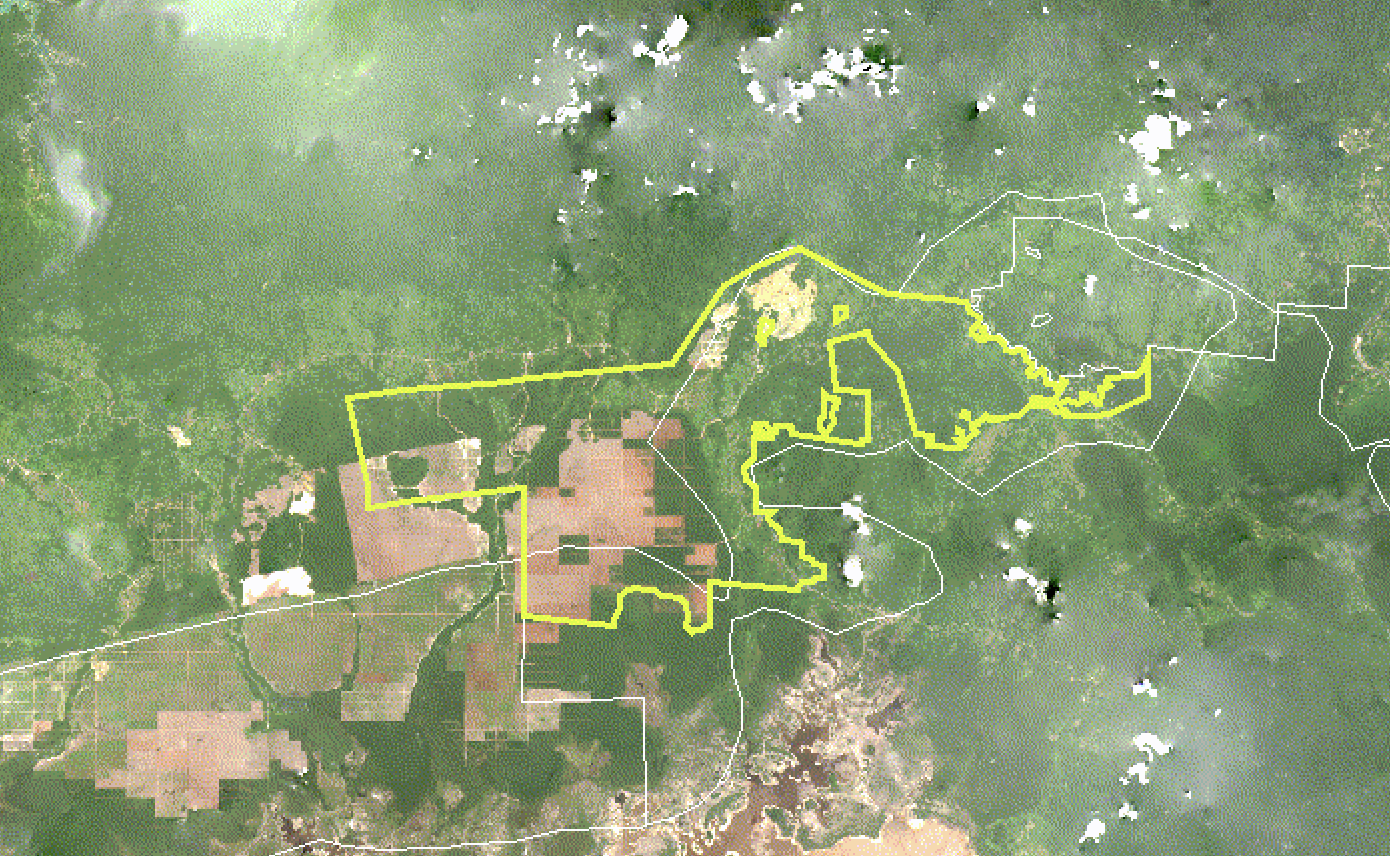
- The analysis highlights that the greatest amount of deforestation, 2,992 hectares, took place inside the Kapôt Nhĩnore Indigenous Territory in Pará in the Amazon on a farm in JBS’s indirect cattle supply chain. 201 farms are located in the Territory.
- More widely, we found JBS slaughterhouses supplying beef products to four Brazilian supermarkets – Carrefour, Grupo Mateus, Grupo Pão de Açúcar and Sendas-Assaí – were linked to 67,542 hectares of deforestation and land conversion across the Amazon, Cerrado, and Pantanal biomes between 2023 and 2025.
Mariana Gameiro, Senior Advisor and Rapid Response Lead at Mighty Earth said:
“We’ve caught JBS buying cattle recently from farms in its direct supply chain, after fire deforestation alerts on these properties in the Amazon were made public by Brazil’s satellite monitoring system. And the links to JBS were verified by recent cattle transport data. Among the seven cases of forest loss in the report, the largest destroyed area was inside the Kapôt Nhĩnore Indigenous Territory, invaded by more than 200 farms.”
“JBS promised deforestation-free beef in Pará, the Amazon state with the highest deforestation rate in Brazil. But it appears to have bought cattle raised on land cleared by fire, at the same time as it was rolling out animal ear-tagging traceability. This signals a major a blind spot in its monitoring.”
“Our analysis also highlights a potential link between one indirect farm supplying cattle to a JBS slaughterhouse in the same location as one of its tanneries. The leather industry is lobbying hard for exclusion from the scope of the EUDR, claiming the co-product of beef production doesn’t drive deforestation. Leather traceability is intrinsically linked to the beef supply chain and to ensure the integrity of the EUDR, leather must remain in this landmark legislation.”
Leather link to deforestation
Ahead of this month’s review of the scope of the EUDR, the leather industry has been lobbying to exclude the co-product of the beef and dairy industries from the legislation. Mighty Earth’s Rapid Response #7 report points to leather traceability being dependent on transparent Brazilian cattle supply chains, and opacity at the earliest production stages – i.e., on indirect cattle farms. The report highlights the likelihood of cow hides from deforested areas entering global luxury fashion markets and the supply chains of major automakers, underscoring the intrinsic link between beef and leather. According to JBS, more than 90 percent of the hides of cattle it processes originate from its own slaughterhouses.
The role of retailers
Despite regular deforestation alerts sent by Mighty Earth to beef slaughterhouses and major retailers in the past three years, the new analysis finds these supermarket stores in Brazil are still selling beef products that originate from high-risk regions where nature destruction persists.
From December 28, 2024, to September 15, 2025, a team of consumers, volunteers, and researchers collected data on 621 beef products from 61 retail stores in Brazil, using the Do Pasto ao Prato (dPaP) mobile app. Beef products were sampled from stores owned by Carrefour (37 stores), Grupo Mateus (2 stores), Grupo Pão de Açúcar (11 stores) and Sendas-Assaí (11 stores). The analysis linked the 621 scanned beef products to 98 slaughterhouses across 17 states in Brazil.
What we are calling for:
- Meatpackers must suspend operations with high-risk farms and demand they address recent and future cattle deforestation risks.
- Carrefour, Grupo Mateus, Grupo Pão de Açúcar and Sendas-Assaí must investigate their direct and indirect links to the cases in the report and suspend any farms identified as suppliers connected to recent deforestation and conversion.
- Retailers to immediately disclose, on a public platform, the volume and origin of their beef and leather products – including details on slaughterhouses, lists of direct and indirect supplying farms, and the share of beef and leather products sourced from verified Zero Deforestation and Conversion (ZDC) supply chains.
- In addition, we urge them to report and publicly track all alleged cases of deforestation, land conversion, and human rights violations through a public grievance mechanism.
ends
For more information or to arrange an interview please contact:
Carole Mitchell, Global Director of Communications (London)
Carole@mightyearth.org
+44 7917 105000
Notes to Editor:
Delay to cattle ear-tagging in Pará – https://mightyearth.org/article/delay-to-cattle-traceability-in-brazils-para-state-poses-major-threat-to-amazon/
The Rapid Response Program
Mighty Earth, in partnership with AidEnvironment, and using data collected through the Do Pasto ao Prato app, has released its #7 report as part of the Rapid Response program, which tracks recent deforestation in Brazil’s cattle and soy supply chains; it benefits from additional investigations by Repórter Brasil and on-the-ground investigations. The program aims to proactively halt deforestation in its early stages by urging companies to drop slaughterhouses and cease trading with suppliers involved in recent, visually confirmed fires or land clearing. By rapidly ending business with actors contributing to deforestation, further environmental destruction can be avoided, preventing hundreds of hectares of deforestation from becoming thousands.
The reports are published quarterly and push national and international meatpackers, traders and retailers operating in Brazil to act by sending a rapid response to stop deforestation and conversion. The program also alerts international retailers, public prosecutors, feed manufacturers, financial institutions, and other key players about the risks of deforestation in Brazil’s beef and soy supply chains, encouraging them to take urgent action.
Previous Rapid Response reports can be accessed via the Soy and Cattle Deforestation Monitor website.
About Mighty Earth
Mighty Earth is a global advocacy organization working to defend a living planet. Our goal is to protect Nature and secure a climate that allows life to flourish. We are obsessed with impact, and our team has achieved transformative change by persuading leading industries to dramatically reduce deforestation and climate pollution throughout their global supply chains in palm oil, rubber, cocoa, and animal feed, while improving livelihoods for Indigenous and local communities across the tropics.