JBS’s “Callous” Treatment of Workers Puts Profit Before People
As strike enters third week, union employees at JBS’s flagship Greeley plant in Colorado continue to fight for fair wages and safer working conditions
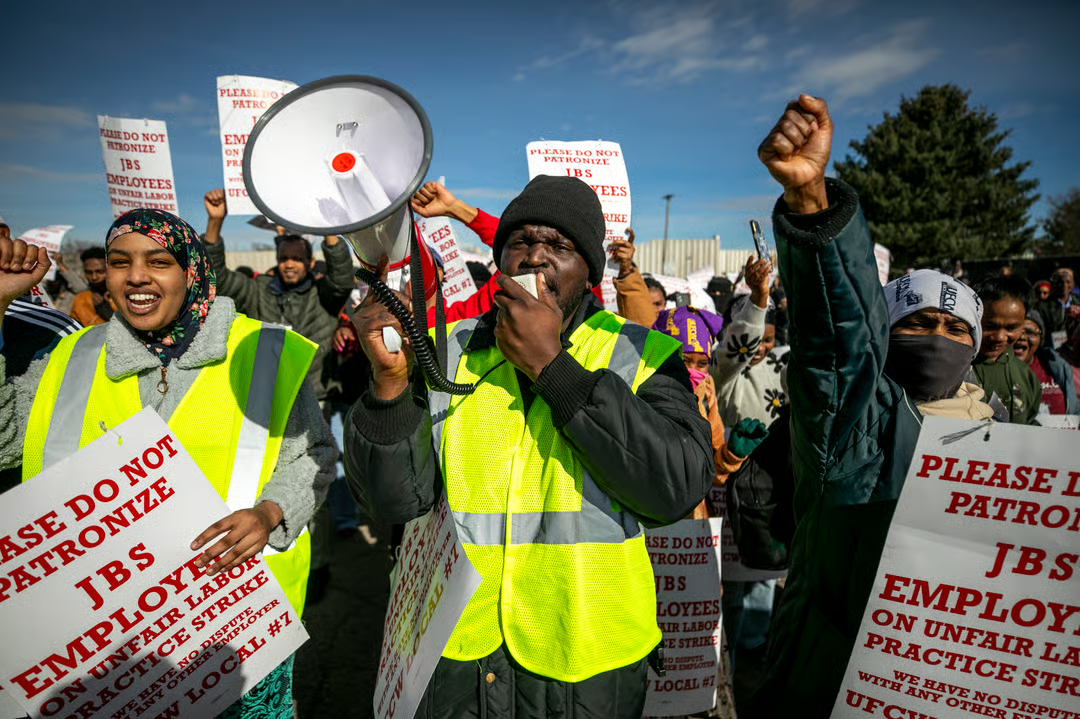
Workers at JBS’s Greeley, Colorado meatpacking plant have entered their third week on strike, continuing a labor dispute with the world’s largest meat company. The strike is led by United Food and Commercial Workers Local 7 (UFCW), which represents 3,800 employees at the facility. The action began on Monday, March 16, following eight months of negotiations and was scheduled to last two weeks, but due to a lack of a resolution it is continuing.
The union alleges that JBS has not offered wages that have kept pace with the soaring cost of living in Colorado with JBS reported to be offering a maximum of 90 cents hourly wage increase at Greeley, its flagship US plant. Nor has the meatpacker ensured safe working conditions, forcing many workers to pay out of pocket for essential protective equipment, including mesh vests and arm guards, which are critical for the safe handling of knives and other hazardous equipment. It is also reported that the company also takes money out of employees’ checks to cover replacements for gear damaged, worn, or stolen from the job without their consent.
Sammy Herdman, Senior Campaigner for Climate, Food, and Agriculture at Mighty Earth said:
“The callous treatment of workers in the Greeley plant is one symptom of JBS’ apparent philosophy of profit over people and planet, and why workers are standing firm on their demands for better pay and safer working conditions.”
“JBS has demonstrated repeatedly that it is not willing to wield its enormous influence responsibly, and regulators should take note. The company is linked to over a million acres of deforestation in the Amazon, emits more methane, a climate super heater, than some of the world’s largest fossil fuel companies, and continues to mislead the public with claims of sustainability while failing to act responsibly.”
The ongoing strike underscores growing concerns about accountability across JBS’s operations and adds pressure to the global supply chain, with US beef prices already up 20 percent over the past year, and labor markets are tightening amid immigration enforcement. While the strike has not affected domestic meat prices, labor experts project if the strike continues it could make historically high beef prices even higher. The meat-processing facility can process up to 5,400 cattle per day.
Wages remain a central issue in negotiations, with the UFCW union arguing that pay has not kept pace with living costs despite JBS’s position as the world’s largest beef company, reporting more than $86 billion in net revenue and record sales of beef in North America for 2025. Meatpacking companies have been reaping record profits since the COVID-19 pandemic even as consumers face rising prices. JBS supplies meat to major fast-food chains including McDonalds and Burger King, as well as wholesalers and grocers such as Costco and Kroger.
JBS under regulatory and legislative scrutiny
The strike comes at a time when JBS and the other major meatpackers in the US are receiving more attention from legislators concerned about antitrust violations. In March 2026, Senate Democrats introduced legislation to break up the largest meatpackers in the country and force foreign companies to divest from their US assets. In November 2025, President Trump directed the Department of Justice to investigate the biggest four meatpackers in the US, Tyson Foods, Cargill, JBS, and National Beef, for collusion and price-fixing, specifically calling out foreign-owned companies like JBS.
The strike underscores the fragility of a highly consolidated industry and raises the potential for longer-term price volatility for both farmers and consumers. Market consolidation is a driving force behind the many US cattle farmers going out of business each year and is implicated in higher beef prices for consumers.
Ends
For more information or to arrange an interview please contact:
Sammy Herdman, Senior Campaigner for Climate, Food, and Agriculture at Mighty Earth
[email protected]
Sydney Jones, Press Secretary
[email protected]
Notes to the editor:
- The power dynamic between laborers and a multinational billion-dollar business results in persistent violations and poor working conditions. In the US, JBS has been fined for 184 health and safety related offenses and 40 employment-related offenses under federal or state law since 2020. This includes employment discrimination, wage and hour violations, and child labor. JBS’s supply chain extends across the globe, and in countries with weaker labor protections, there have been many credible allegations of modern-day slavery.
- In the US, JBS has been fined for 85 environmental regulation violations since 2020 by state or federal governments. JBS paid $1.1 million in settlements to the state of New York for greenwashing, and a similar suit has been filed by Mighty Earth in DC which is staying at the Superior Court despite JBS’s attempt to get it moved.
- JBS has also been linked to severe and widespread deforestation of the Amazon rainforest. And JBS’s climate impact rivals that of fossil fuel companies Shell and ExxonMobil, because of the methane in its supply chain. Globally, livestock is the greatest source of methane emissions – the second most common greenhouse gas, 80 times more powerful than CO2 in the short term, and responsible for a third of global heating thus far.
- The Brazilian owners of JBS having been found guilty of bribery and corruption, and the company has a track record of anti-competitive behavior. McDonald’s sued JBS in 2024 for price-fixing with the three other major beef packers in the United States, which would have increased the price of beef for consumers across the United States to increase profits.
About Mighty Earth
Mighty Earth is a global advocacy organization working to defend a living planet. Our goal is to protect Nature and secure a climate that allows life to flourish. We are obsessed with impact, and our team has achieved transformative change by persuading leading industries to dramatically reduce deforestation and climate pollution throughout their global supply chains in palm oil, rubber, cocoa, and animal feed, while improving livelihoods for Indigenous and local communities across the tropics.