CEO Note: What does nationalization in Indonesia mean for Nature?
By Glenn Hurowitz, Founder & CEO
Indonesian President Prabowo sparked powerful hope for Nature two weeks ago by pulling the permits of 28 Sumatran palm oil, dam, and mining companies whose deforestation supercharged the deadly impacts of Cyclone Seynar. He followed this action with an inspiring and powerful speech in Davos where he challenged corruption and destruction of Nature alike:
“Ladies and gentlemen, let me say this clearly. There is no investment climate without the certainty of equitable rule of law. Nobody will come in to invest in a country that’s lawless or of dubious legal tradition….The rule of law must prevail over any vested interests. In 2025, Indonesia, as I promised, confronted corruption directly, firmly and openly. As with any person dealing with an illness or disease, we must have the courage to acknowledge what we’re suffering from. We are determined to directly fight against this corruption. It’s challenging; not many people believe we can do it, but we have no choice.
“In all sectors of the economy, we found illegality, illegal practices. In the first year of my administration, we have already confiscated 4 million hectares of illegal plantations and mines. It is amazing: I don’t call this free enterprise, or the free market. I called it openly greedonomics. The economics of greed, the economics of rapacious practices.
“…Because we found them violating laws. They were building plantations on protected forests. This is a flagrant undermining ofthe rule of law. Perhaps these rapacious so-called entrepreneurs feel that they need not recognize the sovereignty of the Indonesian government. Or perhaps they feel they can buy all Indonesian government officials. I have reports that some of these people in their meeting say: it’s OK, there is no government official that cannot be bought. Well, I challenge them to try and buy officials from my administration. They’re in for a big surprise.
“…We can only have the courage to enforce the law. There can be no compromise, there can be no turning back. My people demand this, and we are determined to serve our people honestly. I am determined to uphold my oath to defend the constitution of my country and enforce the law of the land.”
These uplifting words emboldened ministers to do their duty to tackle malfeasance by companies, start to protect and restore lands. It earned deserved praise from environmentalists and businesses alike around the world.
Nationalization
Prabowo followed this speech a few days later by announcing the nationalization of the 28 companies. There is a logic to the action that is consistent with his contempt for companies that openly broke the law for years at the expense of the country’s natural resources and Indonesian people’s lives.
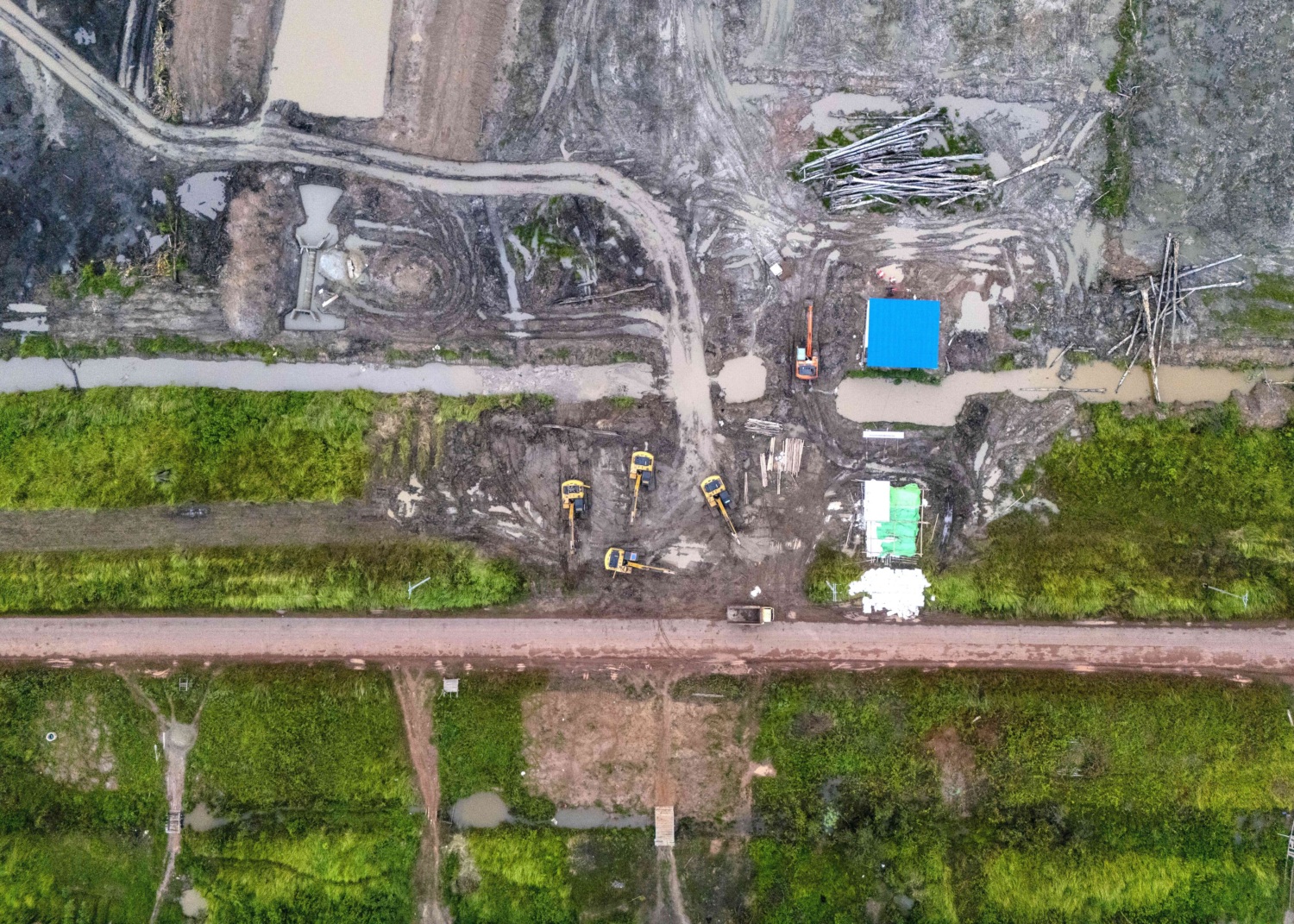
But nationalization in Indonesia (or in other countries) has rarely driven nature protection or economic success; instead it has left a damaging legacy that Indonesia still struggles with. Indeed, the threat to Indonesia’s forests has shifted from large private sector companies to state development projects. By far the largest threat to forests now is the state-backed Food and Energy Estates, which has already destroyed nearly 110,000 acres in Papua – with 6.9 million acres planned for destruction. In the last week, we undertook another expedition in Papua; the photos below capture the devastating impact of this state-backed development project.
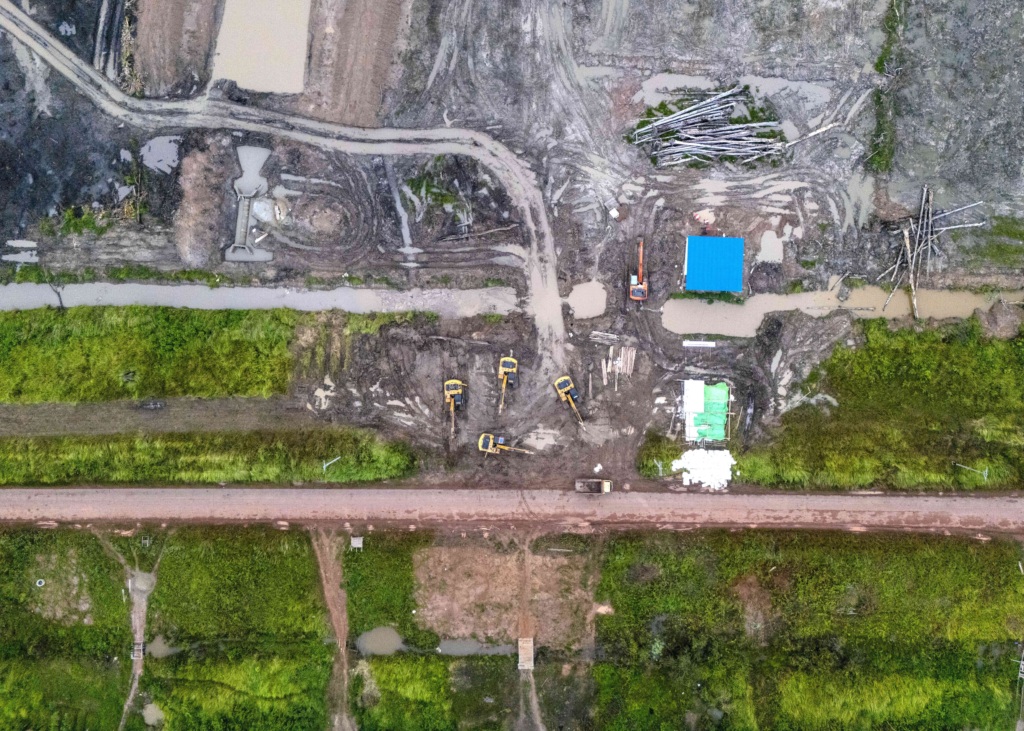
Recent deforestation near the GPA Port District in Tanah Miring, South Papua, January 2026 Image credit: Mighty Earth/Yusuf Wahil
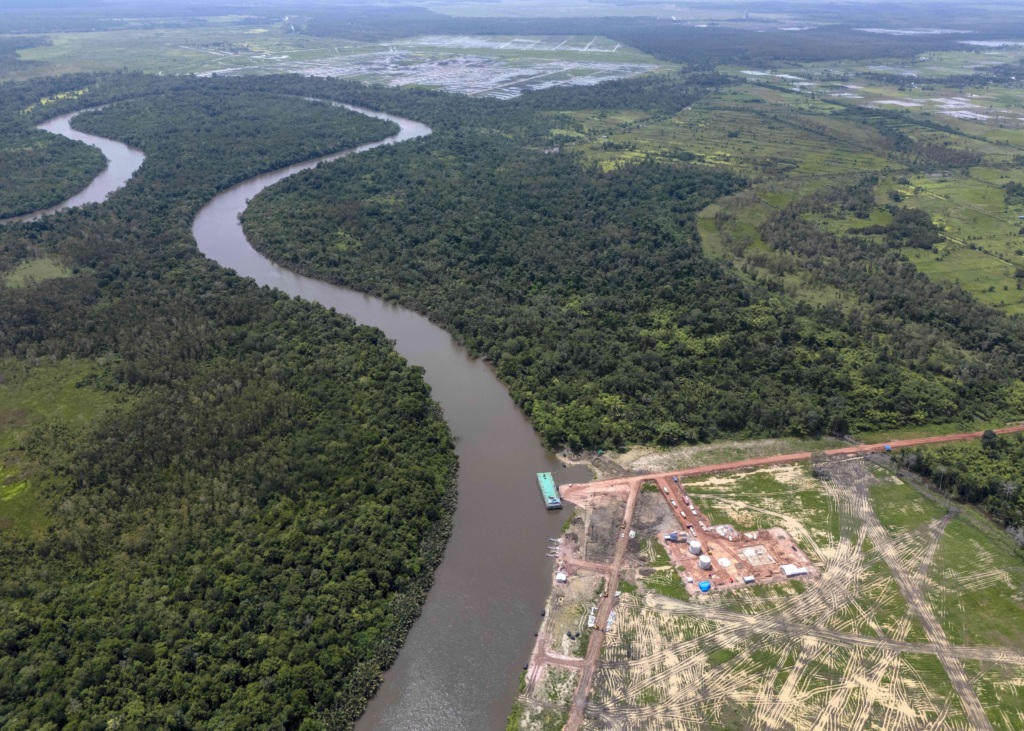
Recent deforestation near the GPA Port District in Tanah Miring, South Papua, January 2026 Image credit: Mighty Earth/Yusuf Wahil
Indeed, agronomists have serious questions about whether the Food and Energy estates will achieve their stated goal of boosting Indonesian food production and biofuels. Instead, they seem likely to follow the pattern of the Ex-Mega Rice project in Kalimantan, which destroyed more than one million acres of ultra-carbon rich peatland forests and orangutan habitat in the 1990s, only to produce rice that could not economically grow on those lands.
The legacy of that previous attempt at state agricultural development was the deaths of thousands of orangutans and other endangered species, leavinga devastated landscape that now burns every year, sending millions of tons of previously stored carbon into the atmosphere and the lungs of Indonesian citizens.
The Food and Energy Estates is an order of magnitude larger in scale and is likely to leave a legacy of destruction beyond what Indonesia has seen, that could have generations of Indonesians lamenting its genesis – and wondering what the government of the time was thinking.
Many Indonesians and international investors are deeply concerned that the wave of nationalization and resource diversion to unwise state projects like the Food and Energy Estates could yield a similar legacy for the environment while also deterring investment from companies that are nervous their assets could be expropriated overnight. Indeed, the government is already sweating because foreign direct investment in Indonesia was flat in 2025 despite the country’s inherent resource and human advantages.
A perception that Indonesia was merely expropriating companies without a legitimate environmental rationale could turn flat investment into a downturn: stock market index MSCI is threatening to downgrade Indonesia from an “emerging” economy to a “frontier” one because of serious stock market irregularities involving many companies, notably Food and Energy Estates developer Jhonlin Group.
And that’s not the only way food estates and Jhonlin are imperiling Indonesia’s investability: Tempo magazine revealed that the company hadn’t gone through the tender process required by law for its work in 2024 to destroy forests and build roads for the food estates. As a result, former Finance Minister Sri Mulyani refused to pay the company for work done in 2024 without government authorization. However, the government leaned on the quasi-independent LKPP agency to retroactively legalize reimbursement, leading it to issue a decree #3/2025 that authorized repayment for expenses incurred in 2024 with 2025 money for projects connected to the food estates. Tempo reported that LKPP’s decree came after lobbying from Minister of Agriculture Sulaiman, a cousin of Jhonlin boss Haji Syamsuddin, as well as the Ministers of Transporation and Public Works, both former Jhonlin executives. Jhonlin netted a 1.2 trilliion Rupiah ($71 million USD) payment.
Using the Government’s Leverage for Good
There is another opportunity: instead of nationalizing companies and attempting to operate them, the government could instead require the owners to invest the hundreds of millions of dollars in ecosystem conservation and restoration needed to heal the damage of their deforestation. In the Batang Toru Ecosystem, for instance, the Tapanuli orangutan sits on just 2 percent of its historic habitat. Some projects, like the Batang Toru dam that sits smack in the middle of orangutan habitat, just shouldn’t be there because of the flood, breach risk and because it’s right in the spot that the sub-populations of orangutans need. There, the government, can join many other countries in a program of dam removal and ecosystem restoration.
Other projects like the Martabe mine have engaged in deforestation that fueled the floods, but may not have to cease operating entirely. But to stay in business, they should be required to fund the hundreds of millions of dollars in ecosystem restoration needed both for flood resilience and to provide a living future for the orangutans. The companies’ links to the deadly floods has given the government real leverage to negotiate a real solution for Nature.
Similarly, on the larger canvas of the food and energy estates, the government could channel the expansion onto the country’s 20 million+ acres of degraded lands instead of intact ecosystems.
Indonesia’s choice
To the extent the government is spending taxpayer dollars in the economy, it faces big decisions about whether it is locking the country into continued dependence on deforestation and pollution, or will be part of Asia’s electrification and decarbonization boom.
That’s as true from an economic perspective as an environmental one. I cannot recommend strongly enough Bloomberg columnist David Fickling’srecent outstanding article, “A $12,000 EV Makes Indonesia’s Biofuel Bet Obsolete.” It discusses how even as the bulldozers are grinding up Papua’s forests and wildlife to make room for plantations to grow sugarcane ethanol to be burned in Indonesian gas tanks, electrification is rendering the project economically irrelevant.
Some countries are doubling down on polluting technologies of the past like oil and biofuels, and others are winning the race for the future through electrification and decarbonization. Indonesia has a choice as to whether it wants growth or corruption.
President Prabowo wants Indonesia to be a land of opportunity for even the child of the country’s poorest person. And he wants to realize the country’s destiny as a nature and climate superpower. Those goals are tightly linked. Achieving them will require a new path in several areas – one he says he wants to take – but which will avoid much bigger risks for Indonesia’s economy and people.
—
© 2026. The text of this article is openly licensed under Creative Commons (CC BY-ND 4.0); you are free to copy and redistribute or republish the article in its entirety with attribution and credit.